Saturday, 15 September 2012

Why more ethnic minorities need to donate blood and register as potential bone marrow donors

Despite public awareness of blood cancers such as leukaemia, the number of people that donate blood and have registered as potential bone marrow donors isn’t as high as would be expected. However, within ethnic minority groups the numbers are significantly lower. Consequently, there's a disproportionate disadvantage for anyone from an ethnic minority background requiring blood transfusions or bone marrow donations in finding a successful match.

There’s approximately a 1 in 100,000 chance of a black, mixed race or Asian person needing a bone marrow transplant finding a successful match. However, that’s in stark contrast to a one in three chance for a white person. Similarly, according to the ACLT, 20% of the black African and Caribbean population are blood group B and only 9% of western Europeans share this group. Yet fewer than 1% of blood donors in the UK are black or mixed race. The statistics really should be enough to prompt anyone (subject to health and the eligibility criteria) to register to donate blood and as potential bone marrow donors.

Ignorance of the statistics is arguably a factor in contributing to so few donors from ethnic minority communities. However, charities like the ACLT and Anthony Nolan work to promote public awareness and encourage donors from all backgrounds (not just ethnic minorities). As a result, the probability of successful donors being found has improved but the number of donors from ethnic minority backgrounds clearly still needs to increase.

Not knowing how effortless it is to register as a potential bone marrow donor or to donate blood is another factor that deters people from doing so. Registering as a potential bone marrow donor can be via a blood or saliva sample and both methods are quick and simple. Similarly, donating blood is a simple process and registering as a potential bone marrow donor via a blood sample can be done at the same time.

The ACLT and Anthony Nolan regularly have donation drives where you can register as a potential bone marrow donor and further information can be found on their respective websites (www.aclt.org and www.anthonynolan.org). Alternatively, visit the Bone Marrow Registry website at www.nhsbt.nhs.uk/bonemarrow. To find out more about becoming a blood donor, visit www.blood.co.uk.
SHARE:

Sunday, 19 August 2012

Reverse racism? Sideways racism? No, it’s just racism

Prejudice directed against ethnic minorities by individuals of the majority indigenous (and typically white in a western context) race is the commonly accepted notion of racism. Although when this notion takes a different format such as a role reversal or the prejudice of one ethnic minority group directed against another, this often evokes a different reaction. Indeed, in such instances, often the label of racism isn’t used with the same acerbity that would otherwise be expected. In fact, sometimes the label of racism isn’t used at all. Yet surely all racism is fundamentally the same, even if by another name or no name at all? Moreover, why is racism from those within minority groups not met as it would be in the more familiar context of such prejudice?

In the communities of some ethnic minorities, undertones of racism appear to be inherent and consequently accepted. This is even apparent in some communities where in theory, multiculturalism should successfully challenge such views.

Race relations in western society have generally improved. Racism is generally challenged and largely considered unethical behaviour. However, largely due to political correctness, it has also become somewhat taboo to candidly discuss.

Arguably, this taboo is what hinders any effective challenge to such attitudes existing within some communities. To suggest that an ethnic minority might be racist is less likely to be received with the same abhorrence as suggesting a white person might be racist. A white person making this suggestion could even be accused by others (including other white people) that in saying so they aren’t culturally or racially sensitive.

The difficulty in challenging these attitudes is also compounded by the insularity of such communities. This further limits the scope for such views to be challenged by experience and wider interaction. Even where second and third generations of ethnic minority groups acknowledge these attitudes to be wrong (often by virtue of their increased interaction within a multicultural society), they nonetheless tacitly accept them, rarely deciding to instead become outspoken of what they know is unethical behaviour.

Some might counter that the reason for insularity within some communities is due to the prejudice they may have experienced. This is particularly in instances where immigration has been met with racism and a frosty reception by governments and the wider public. No minority group can be blamed for such a knee-jerk reaction and a disinclination to integrate within a wider society that once appeared so hostile. Nonetheless, this approach has meant any existing prejudices within such communities remain unchecked as individuals are not subject to positive experiences that would otherwise refute these attitudes. Unwittingly, it also supports wider racist views.

Take the sentiments of the BNP. While being interviewed on the BBC’s Newsnight, Nick Griffin, leader of the BNP, was questioned on his view of “mixing races” and if he opposed this. Rather than attempt to gloss over or deny this, he candidly admitted that this was his opinion (and presumably that of his party) but added that this was a view shared by other ethnic minority groups.

Unfortunately, while in a minority, there are sections of some minority groups that would share these views. In doing so, this gives credence to an ideal of a far-right party that doesn’t even support their presence in Britain. It also illustrates the inconsistency of how racism is perceived based on who it comes from.

In his Bigger and Blacker show, Chris Rock examines modern day racism – Black people yelling "racism!" White people yelling "reverse racism!" Chinese people yelling "sideways racism!" Like much of Chris Rock’s material, a lot of truth is astutely said in jest. And while not the central theme of his sketch on race, the notion of varying labels to describe racism is certainly accurate. The idea of reverse racism is often perceived as a form of positive discrimination or positive action but has also been used more simplistically to refer to racism that doesn’t conform to the more familiar notion.

Racism by another name doesn’t change the fact that someone is racist. Yet giving it a different label makes the flawed suggestion of there being some nuance that supports just that. It also perpetuates an irrational and inexcusable rationale that essentially encourages such attitudes.

It’s fair to say that a degree of prejudice exists within everyone and therefore within every racial group. Yet when it remains unchecked, it leads to attitudes that are simply unethical and should not be tolerated by those that choose to accept and ignore them.
SHARE:

Sunday, 5 August 2012

Jamaica "to di world" – the global cultural influence of Jamaica

With a population of fewer than 3 million, the extent of Jamaican influence worldwide is no small feat. Jamaican cultural influences and presence are visible in music, cooking, western vernacular, sport and beyond. Yet how has a relatively small island managed to be so far reaching in its cultural impact around the world?

Jamaican cultural icons have transcended their respective fields to become household names. Bob Marley, Jimmy Cliff and many Jamaican musicians are internationally known and have achieved iconic status within the mainstream. Similarly, the Jamaican track team has become internationally recognised beyond just athletics aficionados and sports fans. In the UK, Levi Roots’ Reggae Reggae Sauce has become a product that can be found in many households and even BBC children’s programme Rastamouse has brought a Jamaican influence, albeit stereotypically, to a preschool audience. Jamaican influences have clearly touched diverse aspects of society.

Jamaica has always commanded a presence beyond that expected for its size. Jamaica was the first country in the British West Indies to gain independence in 1962. This was following Jamaicans voting to leave the short-lived West Indies Federation in a 1961 referendum. With the British empire no longer being sustainable, largely due to World War Two having taken its toll, the Federation was considered a solution by the British to achieve eventual decolonisation in the Caribbean. At the time, it was inconceivable that a nation the size of Jamaica, and the other smaller islands in the British West Indies, could be viable independent states. However, a year after the referendum, Jamaica gained independence with most of the other islands following suit in subsequent years. Throughout contemporary history, it’s apparent that Jamaica has never perceived itself as a so-called “small island”, as it often (somewhat disparagingly) refers to the other Caribbean islands as. That posturing too underlines the explanation for the extent of how far afield Jamaican culture has managed to be exported.

The Jamaican diaspora is key to understanding the wide reaching influence of Jamaican culture. Post-war emigration from the Caribbean largely found West Indians travelling to Britain, America and Canada. With Jamaica as the largest and most populous island of the former British colonies in the region, Jamaicans made up the majority of West Indian immigrants in their respective new homes and their culture was duly exported with them. In Britain, the sizeable Jamaican diaspora has meant its influence can be found even in commonly used British vernacular. Furthermore, Jamaican culture has often influenced those within the nations the diaspora finds itself in.

Jamaican influences in Black British music are well documented and have been throughout contemporary history. Reggae was not exclusive to Jamaicans or even blacks with acts such as UB40 experiencing success within the genre. Meanwhile, ‘undiluted’ reggae from Jamaica continued to thrive while reggae infused genres such as lovers rock provided an accessibility for audiences that had no connection with the Caribbean let alone Jamaica. Similarly, Snow, a white Canadian artist, was clearly influenced by Jamaican culture as reflected in his music.

The accessibility of the culture has underpinned the success of Jamaican cultural exports that have been embraced in unlikely places. I’ve seen reggae enjoyed by natives in Thailand and witnessed the authentic dancehall (and Soca I might add) scene in Germany where there wasn’t anything contrived in seeing daggering and the nuh linga along with hearing the German DJs speaking in patois. There’s also a vibrancy and welcoming nature that is intrinsic to Jamaican culture that makes non-Jamaicans compelled to experience it even without any connection to Jamaica themselves.

This infectiousness is extended to subsequent generations of the Jamaican diaspora and there’s a pride in the culture and heritage within those of the diaspora that were born outside of Jamaica. As a second generation Jamaican and Bajan, I don’t embrace the culture of one side of my parentage more than the other. However, Jamaican culture is probably what I am more associated with by others who know my heritage.

Within my generation of second generation Jamaicans, the culture is certainly championed as strongly and proudly as it would be by those born in Jamaica. And with the size of the Jamaican diaspora, the longevity and impact of the culture is almost a given. While there are larger diasporas with similar traits, said cultures struggle to transcend to the extent of Jamaica’s, despite the island’s relatively small size and population.

China, the South Asian subcontinent and many African nations to name a few, have sprawling diasporas with subsequent generations retaining the same pride in their heritage as those from Jamaica. Yet while their respective cultures are visible, their influence has not managed to permeate mainstream society in the same way. Perhaps their size affords them a degree of insularity that prevents this. But comparatively, it indicates just how much of an unparalleled impact Jamaican culture has worldwide. Only Latin America comes close with the influence it has largely on American society. Yet to compare a continent with an island the size of Jamaica merely compounds the argument.

Jamaica’s global influence will continue to thrive with its diaspora and the vibrancy and accessibility of the culture. The influence of Jamaican culture has meant it has now positioned itself to be championed by even non-Jamaicans that have no connection or heritage with Jamaica. With the extent to which that influence has already permeated mainstream societies, it’s likely to remain a feature of cultural globalisation for some time.
SHARE:

Sunday, 29 July 2012

Black, working class but in no way inferior

For anyone who doesn’t know me beyond my blog, I’m black. And I’m also from a working class background (although that might have been more apparent from some of my previous posts). Both my race and class are attributes I am proud of and I consider them to have contributed to shaping many of my experiences and perspectives in life. I see neither my race nor my class as an excuse for failure and I like to think my own life refutes that notion too. I am well-educated, broadly content with the person I am and (despite my many, many gripes about it) have a reasonably good job. Indeed, aside from a few blots, I am accepting of the hand life has dealt me.

There are others, some of whom have had different experiences from me, who consider being black and working class a double whammy in life. For many, being black is already deemed to be on a hiding to nothing and a guarantee for discrimination at various points in your life. Similarly, being working class is considered to result in being socially ostracised by the middle classes and a constant reminder not to get ideas above your station when it comes to ambition. At various points in my life, I have experienced all the above. Therefore I’m not quick to criticise those who maintain that opinion.

I fully acknowledge that my race and my class have made things harder for me than say a white, middle class male living in suburbia. It’s made opportunities less accessible and less apparent, often due to ignorance. Subconsciously, at times it’s also made me doubt my own ability to succeed to the same heights as my peers who come from a different background.

I grew up in a multicultural, working class community. My first school broadly reflected this in the intake. Needless to say, most of us came from working class families. Most of us were black too but at that age we didn’t give it much thought. When I went an inner city comprehensive at 11, it was more socially and ethnically diverse but I was probably still amongst the majority along racial and class lines. It was a rough school but not the worst and had some good teachers. Nonetheless, there were some incidents that the Daily Mail would have described as “broken Britain in our schools”.

During my time in the sixth form, I attended university open days and conferences with other schools and colleges, many with a middle class, largely white intake. It was then that I started to realise that I might not be amongst the majority once I went onto higher education and into the wider world. Some of the students I interacted with seemed more articulate, more confident and quite frankly more intelligent that my peers and I. And some of them would appear to be thinking the same thing. I would sometimes feel a sense of subtle inferiority having to interact with these students and the contrast between us seemed perceptible (although in retrospect, it was probably less than I thought it was). My race and class had started to make me feel like I might not belong in some circles.

Then I went to university and the status quo I had known was gone. I studied History, a subject traditionally (but by no means exclusively) studied by white, middle class students. For the first time in my life, I was in a minority within my setting.

I was surrounded by middle class students whose experiences and perspectives were so different from mine. Most on my course were white but beyond my fellow history students, middle class white and South Asian students had taken the place I once assumed within the majority. Their lifestyles were also very different from the experiences of my peers within my social circle and I. We worked part time jobs out of necessity; if they worked at all, it was just to supplement the money their parents gave them. For most of us, we were the first in our families to attend university; for them it had been the norm for generations. And many of them had come from private, grammar or selective schools whereas we were coming from an inner city comprehensive. I had no resentment towards them because of the life they had. After all, I had never known any different. But it was certainly an eye opener.

I didn’t walk around thinking other students were better than me but there was a sense that they were better equipped for a life of academia than I was. Academically, I’d gone from being a big fish in a small pond. Yet it took me a moment to acknowledge that they were no more intelligent than me just because their diction and background might have suggested otherwise.

Oddly, being black and working class offered me a credibility for which I only had to be myself to achieve. Yet I always knew that credibility would do little to help advance my career post university.

I did well at university and graduated with a good degree. However, I missed out on a number of opportunities that would have put me in good stead for my working life. This was largely down to ignorance. I didn’t have anyone advising me of the best internships, graduate schemes, placements or useful modules to study to break into a particular field. Ultimately, that ignorance was typical of my background. My parents, both of whom had relentlessly pushed me when it came to education, could offer no advice as this was a world alien to them. Despite their encouragement, they couldn’t comment on a world they had not experienced. That lack of guidance, lack of confidence, and of course being black (meaning institutional racism was likely to work against me at some point), meant I was playing catch-up in life before I had even started.

I use the analogy of a race to describe what I experienced. I’ve trained, just as hard if not harder than the other athletes. And as far as ability goes, I’m certainly up there. But everyone else has a head start on me and their coaches have given them tips that I wouldn’t know because I’ve been self-trained. They’ve also had access to the best training facilities whereas I have to make do with the basic facilities at my disposal. So despite all my efforts and hard training, I’m already disadvantaged before the race even starts. That doesn’t mean I can’t win the race or at least have a good performance although it does mean I need to run harder than anyone else in the field if I want to keep up. Years later, I actually still feel this way and it speaks volumes about the social fabric of Britain.

It’s easy to rue over lost opportunities that have meant I’m not where I might possibly have been in my life. More lamentable is the fact that for a while, I subconsciously kept my aspirations in check which undoubtedly restrained my progress. I didn’t see others from my background in certain positions therefore I didn’t envisage it for myself either. However, eventually I realised I was just as good as anyone else. It wasn’t too late but everyone else had already started the race and I had to catch up.

When I started working, it was a similar story. I was working in a traditionally white, middle class setting. Furthermore, by this point, a burgeoning middle class, most of whom would once have considered themselves working class, had emerged. This ‘new’ middle class was arguably a legacy of contemporary British politics. Socially mobile and socially aspirational, they identified more with middle class values and consequently increased the gulf between the working and middle class. On race and class grounds, I was, and still am, in the minority within my field but I’ve come to realise my background isn’t necessarily a disadvantage.

One thing I’ve had over my peers in higher education, and latterly my colleagues, is a broader life experience. Admittedly, it’s meant at times things have been harder for me but those experiences have shaped who I am. Furthermore, said experiences have not been at the expense of relinquishing or diluting my identity or background.

My work ethic and tenacity is at least in part attributed to my working class background. The acknowledgement that being black I need to work harder to dispel any notion that I cannot be as good as the next person, is also an advantage. I don’t doubt that’s different for many ethnic minorities. But the progress and broader acceptance other communities such as those from the South Asian diaspora have already achieved, arguably makes their path easier.

I don’t expect or seek any sympathy for the path I’ve had to take in contrast to others and I don’t feel it’s warranted either. Nonetheless, it should be acknowledged that by virtue of my race and my class, that path is subject to difficulties that others will never encounter.

For someone from my background not experiencing exposure to a world other than their own, they are unlikely to experience any sentiments of inferiority if they never encounter anyone to evoke it. Yet the reluctance to seek those experiences can suggest such inferiority exists before it even comes to the surface. There’s clearly something deep rooted about this that needs to be addressed in society beyond just a peppy can-do outlook.

I can’t pontificate about it “being easy with the right attitude” because it isn’t. However, what’s important is not suffering from an inferiority complex that panders to the notion that anyone should settle for less based on their class or race. Society attempts insofar as possible to predetermine that inferiority and perpetuates the apparent limitations and restrictions through long established social structures. No one should bemoan their background and I’m certainly not suggesting that. Conversely, no one should feel their background prefigures challenges that others would automatically bypass. Alas, the status quo is a sad reality while others remain ignorant to just how fortunate they are.

SHARE:

Thursday, 12 July 2012

Ethics aside, Haye vs Chisora isn’t a gimmick. It actually has the makings of a good fight

When the David Haye vs Dereck Chisora fight was announced, it was met with mixed opinions. Some felt the fight shouldn’t take place given it could be perceived as glorifying the brawl both fighters had following Chisora’s fight against Vitali Klitschko. Similarly, many felt the fight was simply capitalising on the hype from the fracas rather than it being a legitimately good fight. However, putting that aside, Haye vs Chisora actually has the makings of a decent fight.

The British Boxing Board of Control (BBBoC) is strongly opposed to the fight taking place. Following Chisora’s behaviour in the build up to and after his fight with Vitali Klitschko, the BBBoC indefinitely suspended his boxing licence. Chisora was seemingly left in boxing wilderness – until Frank Warren came up with the idea of a fight against Haye.

I have no doubt Warren was already scheming to make this fight before he even returned to London after Chisora’s fight against Vitali Klitschko. Furthermore, I doubt Haye took much convincing to come out of “retirement” once he too realised how much money could be made by the fight.

Correctly sensing the interest and money that could be generated by a fight between Haye and Chisora, Warren decided to circumvent the BBBoC’s suspension of Chisora. Consequently, both fighters are licensed by the Luxemburg Boxing Federation for this bout, despite it taking place at Upton Park in London.

Under European Union freedom of trade laws, there isn’t anything illegal about the fight nonetheless taking place on British soil. Despite Warren having clearly considered the ramifications of such a step, he isn’t promoting the fight – presumably mitigating the risk to his own licence as a promoter. Instead, it is being promoted by BoxNation, the boxing channel which he part owns.

It’s fair to say the BBBoC were and still are livid about the fight taking place, threatening to revoke the license of anyone taking. However, the BBBoC’s failure was their action against Chisora. Had the BBBoC stated how long Chisora’s suspension would be, any attempt to circumvent this would indeed have undermined the Board. Yet in failing to take a clear stance, the BBBoC has become a victim of its own indecisiveness. While the BBBoC may pontificate about the lack of ethics behind the fight, the fact that they will not receive a sanctioning fee for this fight has arguably contributed to their vitriol.

I acknowledge the argument that the scenes at the post-fight press conference in Munich were bad for boxing and particularly bad for British boxing. In a previous post, I discussed the undue negativity it would bring to the sport (and I also suggested this fight could happen). But boxing is a professional sport and promoters and fighters are going seek the fights that generate PPV buys and ticket sales. That doesn’t mean ethics and morality should go out the window. However, the fact is it becomes secondary to the money that can be generated.

Personally I think the fight should happen. The events in Munich were lamentable for boxing but they nonetheless happened. Ignoring them by not making this fight would not make any difference. Had the BBBoC been clear in its suspension of Chisora, my stance would have been different and I would have supported the argument that the fight would have undermined the Board. Yet in this instance, the BBBoC unwittingly encouraged the approach of Warren, Chisora et al and they will hopefully have learned from such a poor ruling. The BBBoC might be bitter but it is a result of their doing. Furthermore, the BBBoC’s threat of sanctions against anyone involved in the fight is seemingly futile. By the Board’s own admission, the fight is legal and they are powerless to do anything about it going ahead.

The fight has also come under criticism for being a gimmick, merely using the hype of the post fight press conference to generate interest. It has undeniably captured attention with press conferences separating the fighters with metal fences and heavy security to accentuate the animosity between them. Although for many boxing fans, it has the potential to be a decent fight and makes commercial and sporting sense.

When Haye announced his “retirement”, with a fight with either Klitschko brother being an exception to his decision, no one really believed him. Haye’s performance and defeat to Wladimir Klitschko was certainly lacklustre and he needs an impressive win to redeem himself before attempting to generate interest in a possible fight with Vitali (a fight with the elder Klitschko brother has been rumoured despite Bernd Boente, the Klitschkos’ manager, seemingly doing everything he can to avoid it). Beyond beginning to sell a possible fight against Vitali, Haye would also need at least one fight to address any ring rust and a fight with Chisora therefore makes sense.

I have a lot of time for Haye. Despite the Heavyweight division being so uninspiring, Haye cannot be judged on the basis of his opponents in the division. He is arguably one of the most explosive punchers pound-for-pound and has retained his speed as a cruiserweight. Despite his poor performance against Wladimir Klitschko, he also showed he has a chin, contrary to the claims of a lot of his critics. Notwithstanding the competition within the division, I still consider him to be one of the best current Heavyweight fighters.

Like others, I thought Chisora was a domestic/European fighter at best prior to his fight with Vitali. Yet Chisora showed heart, moxy and a great chin, not once being overwhelmed by the event or his opponent. The Vitali that Chisora fought was admittedly an aging and slowed down version of the fighter he used to be. Yet Chisora took several big shots from Vitali, continuing to come forward for all 12 rounds.

While both Klitschko brothers are accustomed to fighting opponents that turn up for the purse and expect to get stopped, Chisora came to fight. Indeed, it’s a shame that his performance was overshadowed by events outside of the ring. But take those attributes and you have a boxer that comes to fight and he’ll be prepared to go toe-to-toe (no pun intended) with Haye when they meet in the ring. Like Haye, Chisora too is seeking to redeem himself having lost three of his last four fights – that’s not including his first ‘fight’ with Haye in Munich.

Haye vs Chisora is speed and explosiveness vs durability and pressure. Add the needle between both fighters and the hype, and you have the ingredients for a good match-up. Of course, in boxing, some fights don’t live up to their potential. But the potential is certainly there for anyone who thinks it’s little more than a publicity stunt.

I expect Haye to win by stoppage, eventually having too much power and speed for even Chisora’s chin. Chisora will come forward and is likely to try and neutralise Haye’s speed with pressure. Although he’s not faced an opponent with Haye’s speed and I doubt any of his sparring partners have been able to replicate that. Chisora’s durability could avoid an early stoppage but eventually I expect Haye to find an opening in Chisora’s defence and brutally exploit it.

Hopefully both fighters can behave themselves in the build up to and during the fight. If they can deliver a good fight, perhaps it will be a step in improving the reputation of British boxing following the last time they fought outside of the ring.
SHARE:

Sunday, 17 June 2012

Rejected equality - how some women (and men) are guilty of causing gender relations to take a retrograde step

While patriarchy and misogyny still exist in modern society, progress has been made in redressing the balance and achieving a greater measure of equality between men and women. Some traditional notions of gender roles of course still exist and probably always will. But overall, things have improved. However, despite the improvements, some women, and indeed some men, are characterising gender relations with sentiments that serve only to erode that progress.
Gender relations have undoubtedly been redefined. But that redefinition need not do away with tradition and chivalry in the process. A man offering a seat to a woman, refusing to split the bill on initial dates and buying his partner something nice now and again, need not be banished with one fell swoop in a blinkered quest for absolute equality. After all, despite any undertones of misogyny in viewing women as the ‘fairer sex’, it’s nice to be nice. And if tradition encourages that, then so be it. However, it’s once the materialistic side of that gallantry becomes void of altruism and instead an expectation that a problem arises. Nonetheless, and somewhat worryingly, some women are actually striving for this while remaining ignorant to the adverse affect this has on modern gender relations.

A culture of the ‘WAG’ has become more apparent in recent years and for some has actually become desirable as a route to a life of luxury. Some females will candidly proclaim they are seeking a partner that provides them with a life that they would otherwise not be afforded. Actual attraction is secondary and a minor detail of any so-called ‘relationship’. This isn’t just young females who may not know better to see past a life of superficial materialism, but also professional, educated women who perceive a man who can fulfil this aspiration as a prerequisite for any future partner.

A woman seeking stability in a future partner is a no-brainer. And in some instances, that will be manifested by a good financial standing. After all, no one wants to embark on a relationship with someone that will throw them into a life of financial instability because of a general nonchalance towards money. But the emphasis placed upon financial standing by some women isn’t always to do with stability per se. Rather it’s an expectation that the man must fulfil a role that effectively makes the woman subservient in every possible way. The sad reality is that said women don’t realise this as the effect of their approach to relationships, or the extent to which it erodes any equality between men and women. Furthermore, they don’t realise that by characterising their relationship as akin to one of an arrangement, many men will wrongly expect something in return – herein lies the subservience they are unwittingly subjecting themselves to. But despite this, why are the women who choose this approach blind to the reality?

For some women, the catalyst for this behaviour can be influences from others that have chosen this lifestyle for themselves. Superficially, onlookers will see said relationships in a positive light. The woman has whatever she desires and the man appears content to provide for it. At face value it seems great. But look deeper and there is no substance to such relationships. Indeed, the man is likely to want something for ‘meeting his end of the bargain’. However, that may be something the woman doesn’t want to give him, especially if there isn’t an attraction beyond an appeal to the lifestyle. Consequently, it makes for a relationship of convenience that is void of emotion, mentally abusive for the woman, and indeed the man, and drains any self-esteem from all involved. Either that or the ‘relationship’ is short-lived until someone decides it’s ‘on to the next one’.

The lack of realisation amongst some women that a man will want something in exchange for such a relationship is surprising. But especially amongst women who should know better yet remain naïve to such a basic fact. An educated, professional woman, who is actively looking for a relationship, once told me how she would frequently accompany a female friend of hers to dinner with men they hardly knew. This was with the expectation that the men would pay the bill without question. Yet she remained naïve to the fact that the men would want something in return. Needless to say, both women are very much single, despite aggressively looking to find a partner. Perhaps their approach isn’t as sure-fire as they thought it would be.

There are of course men that are just as much to blame for facilitating relationships of this nature. If there were not men willing to fulfil such a role, they wouldn’t be sought by the women that desire the arrangement they offer. Such men are just as complicit and for similar reasons too. Not perceiving yourself as being worthy of a partnership, and instead needing to substitute attraction with transactions, is a telling sign of low self-esteem – just as the women who take part in this charade are subject to. Such men feel it’s the only way they can attract a woman and as long as the lifestyle they bring continues, the woman will seemingly hang around. There are also the men that have bought into the notion that fulfilling such a role is their duty, yet they are often unable to afford the lifestyle they attempt to emulate. For them it’s a double fail.

It’s important to remember that the women that seek these relationships of convenience are not the majority. But in contrast to the gender equality achieved in modern society, their efforts are made even more apparent and out of place. It’s also important to apportion the blame to both the men and women who bear these attitudes. Their naivety and misguided approach erodes the progress made in gender relations yet they remain blind to their actions.

The tradition of chivalry can remain compatible with equality between men and women. Most men are happy to characterise their relationship with such sentiments while remaining in a relationship that resembles a partnership with mutual respect and equal standing. There is no subservience for a woman in allowing herself to be treated well, even if that means occasionally being placed on a pedestal. Yet for the women that seek an arrangement of convenience rather than an actual relationship, their aspirations are at the expense of genuine happiness. They may not admit it but there is only so much materialism and superficiality that can disguise a lack of attraction before it truly rings true.
SHARE:

Monday, 7 May 2012

Why has Dwain Chambers been made a pariah of athletics?

When it was announced that the British Olympic Association (BOA) had lost its case against the World Anti-Doping Agency (Wada), it was met with mixed views. The ruling affected a number of sportsmen and women but the most high profile was of course Dwain Chambers. Indeed, for many, it was simply about whether Chambers should be allowed to compete at the London 2012 Olympics.

Many opposed the ruling with indignation arguing drugs cheats (or just replace that with ‘Chambers’) should never be given the right to compete for Britain at the Olympics. Conversely, others felt drugs cheats (or again, replace with ‘Chambers’) should be given a second chance. I was in the camp of the latter and have been since it became apparent Chambers had been made a pariah of athletics and ostracised by the athletics establishment following his ban.

Chambers was banned for two years after testing positive for THG, a banned steroid. Including Chambers himself, I don’t think anyone would have argued against the ban. It was in line with the rules and Chambers had knowingly broken those rules when he began taking banned substances with the aim of improving his performances. Ironically, with few exceptions, Chambers’ performances were actually average (by his standards) while he was taking THG.

What Chambers and others didn’t anticipate was what occurred following his ban.

By his own admission, Chambers didn’t expect he would be welcomed back into athletics with open arms. But the extent to which he was made a pariah of the sport was not anticipated. Invites to track meetings were not forthcoming and the Euromeetings consortium made the recommendation that their members not invite former drug cheats to any of their events – a recommendation seemingly subtly targeted at Chambers. Chambers had effectively been blackballed. A failed attempt to overturn his Olympic ban to make him eligible for the Beijing 2008 Olympics made that even more apparent.

During and following his ban, Chambers tried his hand at American Football and played in the now defunct NFL Europa league. He also had a short-lived stint in Rugby League playing for the Castleford Tigers. But despite athletics turning its back on him, he eventually returned to the sport. In spite of the lack of opportunities for him to compete, Chambers showed himself to be faster and hungrier than many of the younger British sprinters, many of whom received lottery and UK Athletics funding. Furthermore, in a post-ban high, Chambers made the final of the 100m at the 2009 World Championships in Berlin.

So why was Chambers’ return to athletics met with such hostility? Since testing positive for THG and serving his ban, he has shown humility, integrity and contrition, going as far as working with the authorities to share his knowledge of the Balco scandal. Chambers has also worked with and spoken to young people, sharing his story as a cautionary tale for young would-be athletes. Chambers has certainly tried to make amends for his previous transgressions, a fact that the BOA and the athletics establishment have chosen to ignore.

Prior to his ban, Chambers was considered by many within the UK athletics scene to be too braggadocios, a la many of the American sprinters. His physique (albeit the right build for a sprinter) probably intimidated some of the competition and his demeanour just didn’t match what the old guard of athletics wanted to see. He was perceived as having too much swagger for a sport that many felt should be ‘gentlemanly’ in every aspect. Chambers’ involvement in the Balco scandal only served to fuel any disdain the establishment had towards him.

The likes of Lord Coe, Steve Cram and Lord Moynihan consistently pontificated about the disrepute Chambers had brought to athletics. Listening to them would make anyone think Chambers was the only athlete to take a banned substance. But more significantly, it made it increasingly apparent that Coe et al did not see Chambers as ‘one of them’.

This didn’t come down to race (no pun intended) but image. Chambers was too brash to fit the image they sought for ‘their’ sport. In 2009 Steve Cram wrote an opinion piece in the Guardian opposing the decision for Chambers to be invited to the Paris Golden League. Cram described it as “preparing to break a gentleman's agreement”.

With all this talk of “gentleman’s agreements” and the decorum expected from athletes, it’s no wonder some, such as Steve Cram, don’t acknowledge the good character and form on the track that Chambers has shown since serving his ban. His contrition, the fact he is the fastest sprinter in Britain (and that’s without lottery and UKA funding that slower and lazier athletes continue to receive) and his cooperation in sharing his knowledge with the anti-doping authorities has been seen as secondary. To some within the athletics establishment, there is an expectation of certain etiquette within the sport. And if an athlete does not conform, the establishment is not happy.

Following his record-breaking 200m race at the Beijing 2008 Olympics, Usain Bolt was criticised by Jacques Rogge, President of the International Olympic Committee (IOC) for the manner of his celebrations. Perhaps the extent of euphoria shown by Bolt wasn’t sufficiently European or indeed ‘gentlemanly’ for Rogge’s liking. The athletics establishment clearly desire an image void of braggadocio that so many non-European athletes, and indeed athletes not of European descent, now show. Chambers was guilty of doing just that and was therefore out of favour with the establishment, and those like-minded within the public, before he had even been found guilty of taking THG.

Sportsmen and women should of course be sporting in their conduct. But that need not conform to a traditional perception of what being ‘sporting’ is. Had it not been for Usain Bolt, athletics would have continued to experience a slump in its profile since its heyday. Can the braggadocio that has now become part of the sport therefore be such a bad thing?

There are many that genuinely believe in a life ban for drugs cheats and they are entitled to their opinions. Indeed, in some instances, they may be right. But for many that share that view, their opinions are simply fuelled by a disdain for Chambers.

Chambers has served his ban and arguably suffered more than other sportsmen and women in his position. He doesn’t deserve to be vilified by the athletics establishment because he doesn’t conform to their archaic image of the sport. Chambers fully deserves his second chance.
SHARE:

Saturday, 24 March 2012

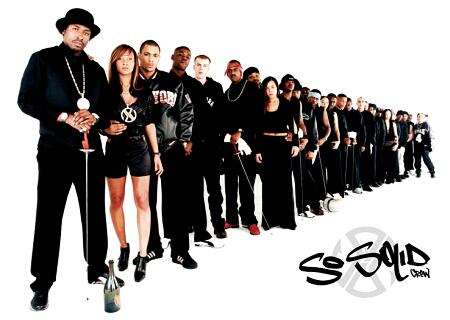
Reaching the parts other British urban acts couldn't - why So Solid represented a watershed for British music

Despite largely not being active as a collective for some years, So Solid continues to be name checked by current artists in the ‘urban’ music scene. The collective had a profound impact on today’s thriving urban music scene that sees such acts as established fixtures in the UK pop charts. So Solid clearly left their mark on the music scene beyond UK garage and its apparent successor Grime.

So Solid’s rise to prominence was somewhat unprecedented for a British urban act not from the RnB scene that mainstream audiences typically find more palatable. Before garage, urban British genres had become a voice and representation of multicultural Britain but typically reached a glass ceiling when it came to commercial success. Jungle had flirted with the mainstream charts with hits such as M Beat and General Levy’s Incredible and Roni Size and Goldie managed to take Drum & Bass beyond the underground. Going further back, it had been a similar story for other homegrown genres. The reggae infused genre of Lovers Rock brought a sound that reflected the identity of multicultural Britain and the second generation of post-war Caribbean immigrants. Songs like Janet Kay’s Silly Games and Louisa Marks’ Caught You in a Lie were able to capture mainstream attention. Yet despite the popularity of Lovers Rock, mainstream success was relatively limited.

Conversely, early UK hip hop, which some might consider to share similarities with garage, struggled to permeate the mainstream. Indeed, garage ultimately became what early UK hip hop sought to be. After an early identity crisis of British rappers adopting faux American accents, acts such as London Posse reflected inner city British life in records like How’s Life in London. Nonetheless, early UK hip hop was unable to step out of the shadow of its American counterpart. The slick videos, the arguably more radio-friendly production and major label marketing, was regarded by many in the UK as superior to anything that could be produced closer to home.

More significantly, UK audiences found it difficult to connect with early UK hip hop. Hearing rap in a British accent sounded alien and the images of UK rappers shared too much of a resemblance with American rappers for a meaningful distinction to be made. The clothes, the demeanour and in many cases the vernacular of many artists was just too American for many to embrace. The American twang still adopted by some rappers didn’t help either. Consequently, it added credence to the notion that rap, or rap influenced genres where an ‘MC’ would be the focus, could not be successful with a British accent.

Returning to garage, the more soulful side of the genre was able to experience crossover success with records like MJ Cole’s Sincere. But the smooth vocals and production of these records were sufficiently non-threatening to ensure they could make the transition from the then popular garage rave scene to mainstream radio. Meanwhile, So Solid and other garage collectives including Heartless Crew and Pay as U Go Cartel, were experiencing a burgeoning popularity with a grittier side of MC based garage. This would soon translate into mainstream success and be championed by British youth beyond the inner city communities in which the sound was born.

So Solid, and the garage collectives that followed, reflected inner city Britain in a way that had not been done before. Their image, vernacular and diction reflected that of inner city youth and their ethnically diverse membership portrayed a Britain where class lines had become more prevalent than race in drawing up communities. Indeed, the visuals of So Solid’s debut video Oh No (Sentimental Things) celebrated the garage scene and captured inner city London at the time. Even the production of their music had a London-esque sound to it. Their Britishness was according to how they and inner city British youth had defined it.

There was also the unpolished image of So Solid that led to their credibility. Some members of the collective were more media savvy than others but overall there wasn’t anything manufactured about the collective.
Like most garage collectives of the time, So Solid’s earlier music didn’t seek the lyricism or messages present in hip hop. With few exceptions, their lyrics were superficial, often repetitive and club-friendly. But that didn’t matter to their success and if anything, it made them more accessible to mainstream audiences. Their videos also matched the quality and hype of those made by American urban acts. Videos like 21 Seconds and Ride Wid Us were as glossy as those made by the Americans but the braggadocio they displayed had something British about it. Gradually, even mainstream media wanted to know about the sprawling “crew” that was So Solid.

Again breaking away from American notions of urban music, So Solid looked to Jamaican-influenced sound systems and sound clashes as the format for their own Garage Delight club night. Led by Megaman, the collective also exuded a confidence that didn’t portray them as second-rate wannabe American rappers.

The connection So Solid was able to establish with British youth was central to their success. Inner city youth identified with them and with that endorsement, their popularity grew. Garage brought British youth their own sound but So Solid gave it a persona that they could identify with beyond music. This marked a departure from the idolising of American music that British youth could not identify with yet steadfastly championed often over British urban music.

It’s arguable that had it not been So Solid, another collective would have had the same impact had they come along at the same time. Indeed, So Solid was a product of Britain at the time and a response to British youth seeking a sound and accompanying scene of their own. Nonetheless, So Solid seemed to tick all the boxes in achieving that and their success speaks for itself. Where Heartless Crew further reflected the sound system influence on garage and Pay as U Go Cartel and other East London collectives had a grittier sound that would become the forerunner of Grime, So Solid seemed to strike the balance for success that would transcend the garage scene.

Since the garage scene’s heyday, hearing an MC with a British accent no longer sounds out of place and even a hint of an American accent from a British rapper or MC is reproached. The credibility now lies with homegrown acts and American acts are no longer placed on a pedestal above their UK peers.

Despite the controversy they faced, So Solid represented a watershed for British urban music. The garage scene as a whole was instrumental in bringing about the shift but So Solid were arguably at the helm. While they may not have been everyone’s cup of tea musically, their impact is unquestionable and they arguably helped to create the British urban music scene that exists today.
SHARE:

Sunday, 19 February 2012

Klitschko vs Chisora… or should that be Haye vs Chisora?

After the unacceptable pre-fight antics of Dereck Chisora slapping Vitali Klitschko (and later spitting water at Wladimir Klitschko), Chisora seemed to partly redeem himself (as a fighter rather than a person) to some boxing fans. His performance showed more heart than many thought he would bring to the ring.

I thought Chisora would crumble under the pressure of the occasion and would be defeated by Klitschko in scenes that could resemble Ivan Drago vs Apollo Creed in Rocky IV. Fortunately for Chisora, and with all credit to him, I was wrong. He took several big shots that would have floored many fighters in what has become such a lacklustre heavyweight division and went the distance against an experienced (yet ageing) champion in Klitschko. His pre-fight behaviour was deplorable but he could take solace in his gutsy performance. That was until it was overshadowed by the scenes at the post-fight press conference.

David Haye, who attended the fight as a summariser for BoxNation, had also attended the post-match press conference. However, when the Klitschkos’ manager, Bernd Boente and Haye began an exchange about the failed negotiations for a fight between Vitali Klitschko and Haye, it prefigured the eventual confrontation between Haye and Chisora. Add a character as volatile as Chisora, Frank Warren’s and Bernd Boente's disdain for Haye and Haye’s hurt pride after losing to Wladimir Klitschko, and on reflection some confrontation was probably inevitable. Not to mention Chisora has previously made his dislike of Haye clear in interviews and claimed they’d eventually fight inside or out of the ring. That may have just been trash talk but now the latter has actually happened.
The brawl between Haye and Chisora was clearly bad for British boxing and boxing overall. Neither Haye’s nor Chisora’s pre-fight conduct in the build up to their fights with Wladimir and Vitali Klitschko respectively went down well with many boxing fans. Many felt they had gone too far beyond the pantomime often required to sell tickets and PPV buys in boxing. But their brawl has taken this to another level that many fans and pundits outside of the UK especially will use to criticise British boxers and indeed British fight fans.

Everyone involved was culpable. Bernd Boente could have refrained from goading Haye (and therefore encouraging Chisora) as could Frank Warren. Chisora could have kept it verbal and stayed in his seat and Haye could have chosen not to respond to Boente or Chisora and risen above their bait. Many will blame Haye for throwing the first punch. However, with a man as unstable as Chisora in his face, and given Chisora’s previous threats, I doubt he was ever going to rely on the confrontation remaining non-physical.

Haye’s manager and trainer Adam Booth was cut during the melee and Haye certainly hurt a bloodied Chisora who would already have been bruised after 12 rounds with Klitschko. It mirrored something out of WWE rather than the sweet science. Immediately following the brawl, Chisora also threatened to “shoot” Haye and the German police are now involved. If he hadn’t gone too far with his earlier antics, Chisora has now taken it much further. The British Boxing Board of Control is bound to take action against Chisora for his televised (and now viral) threat to shoot Haye and he could even lose his licence. Haye, although not having renewed his licence since his “retirement”, could also face difficulties in doing so for future fights given his conduct at the press conference.

Haye has made it clear that he wants to come out of “retirement” to face either Klitschko brother and that he wants no one but them. But given his hiatus from the ring since his defeat to Wladimir, one or two fights to address any ring rust could be worthwhile before taking on Vitali. After Chisora’s performance against Vitali, he could have been a possible opponent for Haye in a domestic match-up with the bad blood between the fighters helping to generate interest. Nevertheless, in a fight where Haye would hold most of the cards as the bigger attraction, he may not want anything to do with Chisora now. Conversely, he may now relish the opportunity to finish what has become an extremely personal feud which would lead to claims that the fracas was somewhat staged. I doubt it was, at least not to the extent of the scenes that actually occurred.

Chisora came off very badly in the build up to the fight, only to partly redeem himself as being worthy of a shot with a performance that showed heart. But now he has greatly sullied his character and the sport yet again. And while many saw Haye’s presence at the press conference antagonistic, Boente, Warren and Chisora gave him the platform for what would later ensue. Indeed, I blame Boente and Warren as much as Chisora and Haye as they knew full well what was likely to happen. You can even see the slyness in Warren’s demeanour as Chisora gets up to approach Haye.

Boxing is often accused of being a violent sport by those that don’t understand the discipline, dedication and heart it requires and scenes from the post-fight press conference will only have served to reinforce such flawed views. The hype is sometimes necessary to sell fights but Chisora crossed that line on more than one occasion. Chisora’s trainer, Don Charles, was vocal about being underwhelmed by the slap Chisora gave Vitali at the weigh in and even he may now have had enough of Chisora to prompt him to walk. Add Chisora’s fate at the hands of the BBBoC and his immediate future in boxing does not look rosy. Worse still, boxing itself has taken another hit in its reputation.
SHARE:

Sunday, 29 January 2012

The right principles but a flawed approach – why the government’s stance towards the proposed benefit cap needs a rethink

The proposed benefit cap of £26,000 a year (or £500 a week) is arguably the most prominent proposal in the government’s Welfare Reform Bill. The cap is intended to ensure anyone on benefits does not earn more than the average gross earnings of working families and it has been well received based on public opinion. Unsurprisingly, the sentiments of some right-wing politicians and media (in suggesting that most people on benefits are merely abusing the system) have gone some way to reinforce that.

There are of course people on benefits who knowingly abuse the welfare system and have made a lifestyle choice not to work. And the more generous the welfare system is, the less likely they are to have an incentive to work. One aim of the government’s proposed benefit cap is to address this by eradicating the perception for some that benefits are an alternative to employment. But the government has failed to acknowledge that these attitudes do not account for everyone on benefits. Indeed, the government’s one-size-fits-all approach is the fundamental failure of the proposed reform.

The reform also doesn’t take account of the respective circumstances of someone on benefits, particularly those that have not been subject to long term unemployment and families with children. On the latter, the Bill was defeated in the House of Lords following an amendment that child benefit be excluded from the cap.

In the current economic climate, many unemployed people have been subject to redundancies in both the private and public sector. Being on benefits for them is not a choice but a necessity due to circumstance. However, the rhetoric of the Bill appears to ignore this and effectively plays the employed against the unemployed in galvanising public support for the reform. The government has also neglected to fully consider the impact of the cap on those recently made unemployed.

Take a family living in modest privately rented accommodation where the main earners have become unemployed. Under the proposals for the benefit cap, their housing benefit may not meet their rent payments and consequently they could be compelled to move to cheaper accommodation and possibly social housing. Yet social housing is subject to waiting lists and local authorities have increasingly sold their housing stock in recent years. Compounded by the legacy of the Right to Buy scheme, social housing stock surely cannot meet the demands of an increasing number of people that may require it. Alas, the government has seemingly disregarded this in formulating its policy.

The government has argued that people should not live in accommodation beyond their means and taken in isolation, they’re right. But a family whose financial situation has deteriorated in a short time, and due to no fault of their own, is not the same as the families the Daily Mail like to report on.

There isn’t an apparent solution to this but the government doesn’t appear to have given it much consideration. Some have accused the government of “social cleansing” in forcing those on benefits to move home, particularly in London where rents are higher than elsewhere in the country. This could lead to further ghettoisation of the “haves” and the “have-nots” – something I doubt some members of the coalition government would be averse to given their own social class and views on society.

The lack of consideration for children in the Bill is a further error on the government’s part.

The government has argued that making child benefit exempt from the benefit cap would encourage some people to have more children to receive more in benefits. Regrettably, for some that is perhaps true. But the children themselves should not suffer for their parents’ poor choices. What the government fails to acknowledge is that it cannot always legislate to address attitudes in some sections of society. Therefore there will always be irresponsible people that choose to procreate without the means to responsibly support a child.

At present, child benefit is a universal benefit and should not be considered in the context of welfare payments. Furthermore, is it right that parents and their children be subject to reduced benefits if they suddenly become unemployed? Surely helping people in their time of need is the crux of the welfare system. Yet the Bill goes against this very principle.

In many respects, the proposed benefit cap may appear well intentioned and it is right that no one is better off on benefits than they would be in employment. Indeed, for many, £500 a week in benefits is frankly too generous. The cap aims to ensure deliberate unemployment is not rewarded or seen as a viable alternative to working. But despite its aims, it’s not been fully thought out and clearly lacks pragmatism.

The benefit cap needs to be compatible with the principles of a fairer and pragmatic system. But if the government cannot achieve this, the proposed reform will not differ from attempts of previous governments that have tried and failed to overhaul the British welfare system.
SHARE:
© iamalaw

This site uses cookies from Google to deliver its services - Click here for information.

Blogger Template Created by pipdig