Wednesday, 8 November 2017

The glorification of being busy


While some of us might not like to admit it, we usually prefer to be busy than bored. When we’re bored or idling, we lack stimulation and yearn the feeling of being productive that lends itself to our self-esteem. It’s why many people struggle with depression during unemployment, without having other activities to channel their time and energy into. Being busy staves off boredom and contributes to our feeling of self-worth as rightly or wrongly we feel we have something to show for our time.

Being occupied therefore isn’t a bad thing and it’s necessary for good mental health. But the notion of being busy has changed. It’s become glorified as a measure of success or Stakhanovite-esque ideals and efforts that have skewed our perspective on what really matters. Being busy has come to falsely represent who works harder, whose job is more challenging and more important and ultimately who arbitrarily and meaninglessly gets bragging rights for the aforementioned.

By Alan O’Rourke and licensed under CC BY 2.0
Indeed, we all want to acknowledge our efforts to ourselves, and for others to do the same, as it returns to the validation we all crave from being productive. After a productive and long day at work, I might feel tired but I feel good for what I’ve achieved and that shouldn’t be a feeling we deny.Though that isn’t where said feeling stops in today’s society.

Working a long day is increasingly celebrated as a barometer for how hard we’ve worked yet it’s a Pyrrhic victory if the opportunity cost was any measure of success in our personal lives and our mental health. Many ‘successful’ people have regretted how they worked relentlessly for years, devoting themselves wholeheartedly to their work, only to later realise that they’d done so at the expense of what really mattered. Failing to spend time with family and friends that were no longer around, not pursuing personal passions or finding companionship, even in the platonic sense, had evaded them as years of a tunnel-vision approach to work passed them in the blink of an eye. At which point, they couldn’t make good on what they’d already lost in those years.

A friend and former colleague commented how they felt bad for not continuing to work into the night, on what was a day off, where they’d nevertheless already worked tirelessly for the day since the morning. We’ve now been wired to assume that we shouldn’t give ourselves a break and to do so is to be lazy. Even with the context of clearly putting in work, we don’t warrant ourselves worthy of breathing space because to pause has become synonymous with being indolent. If you consider that ideal in its crudest sense, we’ve basically been programmed to work and remain busy until burnout.

Naturally, there’s something to be said for one’s commitment to a task and we all find ourselves constantly tipping the scales of work-life balance in favour of work to meet work commitments (which doesn’t make it right either). However, we’ve now become conditioned to assume that if we aren’t busy with work, we’re slacking and should consequently feel guilty. It’s a ludicrous idea, and damaging to our mental health, that we actively deny ourselves any modicum of respite. I too have constantly been guilty of the same mindset where regardless of how long my day has been or how much I’ve managed to get achieve, I feel like I’ve let myself down by not doing more.

And it isn’t just a work where we succumb to that mindset. I’ve lamented that in the past I never really valued my time to an extent that I now do my utmost to make good on that attitude. As a consequence, rarely will I allow myself down time to just ‘be’; instead filling any free time I have in trying to reclaim those lost years. I maintain that I’m making good use of my time, particularly in the context of what I see as my previous errors. Nonetheless, there’s something to be said for allowing time to simply not be busy and providing our minds with an opportunity to unwind.

We all need to afford ourselves the mental capacity to manage our thoughts effectively and that’s only possible with an interruption in regularly scheduled programming. Although being in a constant state of preoccupation without any pause won’t facilitate that. So why are we denying such a crucial and easily attainable effort to achieve it?

The balance is there to be struck but society is causing us to fail miserably at achieving it. How often is being ‘busy’ used as an excuse for spending time with family and friends? Or a label for how fabulously ambitious one’s life is in contrast to their peers? Hard work and ambition shouldn’t be played down. On the contrary, they should be valued and celebrated but in the context of giving ourselves occasional and necessary respite. Otherwise, what are our endeavours for if we cannot enjoy them for ourselves and with others that matter?

When I die, I don’t want anyone attending my funeral who was too busy to make the effort to see me when I was alive. If your job was more important and too preoccupying then, don’t be taking the day off or finding an available evening to mourn me when we could have shared an evening together when I was actually here. Yet this is the stance we’ve adopted and it’s damaging our mental health, our perspective and our connections to people that matter.

Being idle is not the solution or the suggestion to counter the glorification of being busy. We need to achieve a balance and recalibrate our gauge on self-worth so that being busy isn’t erroneously interpreted as a contributory measure in allowing self-validation, or in receiving validation from others. It’s necessary to give ourselves respite; not only for ourselves but also for those around us.

Being busy has become a hollow trophy that society has designed to distract us from what really matters. We need to focus on ourselves, those around us and the things that matter to us rather than chasing a preoccupation that has become a distraction and a mistaken badge of honour for so many.
SHARE:

Tuesday, 24 October 2017

Mumble rap is the antithesis of real hip hop


Within any creative sphere, the new and avant-garde is often met with resistance from the established old guard. As any art evolves, many will lament what they view as an erosion of what was once cherished by the purists. Meanwhile, the new wave will transform that notion for a new generation in a cycle that repeats itself with every subsequent era.

Hip hop is no different. Like most art, it’s been subject to transformation between generations; each with a view on what the golden era of the genre is. And that’s often followed by disdain for the eras that came after it.

That opposition lessens with time and hindsight. But right now, even with the utmost objectivity, it’s difficult to say that I will ever be able to offer acclaim to sections of the current wave of hip hop. That isn’t me hating. It’s me objectively recognising that some of the current output from the genre is eroding the art and distancing itself from the essence of the culture. The sound, look and ignorance of ‘mumble rap’, or whatever label it attracts, goes against everything that is hip hop; a retrograde step for a genre that has increased its lyricism with every successive generation until now.

New waves within hip hop have long met resistance, with the biggest detractors coming from New York as the birthplace and longtime bastion of the art. Consequently, anything that didn’t sound like what was coming out of New York and the wider east coast scene was often not considered sufficiently hip hop (ironically, today New York has barely produced a fresh new artist in the vanguard of the culture for years, still relying on veterans for their glory days as the gatekeepers of rap).

The west coast was received that way and even more so was the south when rap from their respective regions began to migrate. Though the west coast gave us NWA, Snoop Dogg and latterly Kendrick Lemar. And when you look at the south, they’ve produced some of the hardest lyricists and legendary artists within the scene period. Just look at UGK, Geto Boys, Outkast and TI as some of the most iconic acts in music, regardless of genre.

Rappers with double time flows like Bone Thugs-N-Harmony and Twista were initially considered by some to be gimmicky. The same could be said for UK hip hop. It all sounded and looked different from east coast hip hop and therefore raised questions about how hip hop it actually was. Nevertheless, lyrically, it couldn’t be denied.

With the importance of lyricism progressing the art, lyrical prowess and content was the key that granted them entry and validation within the culture. It’s the same reason that for many within the culture, sub-genres like crunk could never really assume a permanent seat at the table of hip hop.

Indeed, lyricism is one of the biggest drivers behind why the new wave can’t be cosigned by the culture. Take an excerpt from Migos’ Bad and Boujee-

“Offset, woah, woah, woah, woah, woah, rackings on rackings, got backends on backends, I’m ridin’ around in a coupe (coupe), I take your bitch right from you (you), bitch I’m a dog, woof (grrr)”

It’s hardly a case of subjectivity to opine that those bars are basic and straight garbage. And I don’t even hate Bad and Boujee. I appreciate that much of today’s rap is increasingly driven by melody, thereby making lyrics somewhat redundant to some listeners, but this goes beyond that. And when you consider DJ Akademiks publicly said Migos are one of his favourite groups (rhetoric Joe Budden, like many of us, couldn’t stomach), yet didn’t like Giggs’ verse on Drake’s KMT, it’s clear that DJ Akademiks et al represent a shift in perspectives within the culture.

As an aside, I’ve not seen any feature from an American rapper get the number of pull ups or response that Giggs’ verse on KMT receives since I saw an entire club in Miami throw their diamonds up for Jay Z’s verse on the Diamonds from Sierra Leone remix. Nor do I think any current American rapper is capable of effecting such a reaction with a feature either. Not to deny DJ Akademiks his right to an opinion, but his stance shows just how accepting many from the culture have become towards a sound that previously would have been derided. Meanwhile, he thinks Giggs’ verse was “wack”. Ok then, Akademiks.

Some of the old guard have defended so-called ‘mumble rap’ as merely the sound of a younger generation making music for their time. I can accept that but it shouldn’t mean that the content lacks the substance within its narrative that has been consistent and fundamental to the genre.

Detractors of early west coast gangster rap may have criticised its content as an abuse of freedom of speech. What couldn’t be denied was that gangster rappers were enthralling us with a tale of their existence, accompanied with vivid imagery and storytelling, that remains a cornerstone of hip hop. Yet that’s the crux of what’s missing today.

Take the drug dealer tales that have become synonymous with rap. Many of those tales have long lacked authenticity but at least the wordplay, imagery and lyricism gave audiences something to appreciate. Although today everyone seems to be in the trap (which begs the question, who are the customers?). Furthermore, the now familiar autobiographical tale of the (alleged) drug dealer is both trite and lacking the narrative that made it palatable. I’ve got no issue if these new rappers have a story to tell, just enunciate it so we can actually appraise and appreciate what you’ve got to say.

I can admit to some of today’s melody driven rap piquing the interest and ears of audiences; it’s the content and disregard for delivery and lyricism that I take umbrage with. Rap is an art of storytelling. However, when you’re mumbling your ignorant ramblings, you may as well not tell your story at all. Not to mention doing so under the umbrella of hip hop is damaging the legacy of the culture and betraying its roots as a lyrical artform.
SHARE:

Sunday, 1 October 2017

Mums rightly come first during pregnancy but let’s not forget about dads-to-be

No matter how much empathy one can offer, being pregnant is an experience that no man can fully understand. Pregnancy presents both an onus and a privilege for the mum-to-be in carrying a child. Indeed, when you consider the favourable aspects of pregnancy, there’s much of the experience to be celebrated such as the bond you’re able to establish with your unborn child and the fundamental role you play in their life before they’re even born. However, for most women, pregnancy can also present challenges as they approach the birth of the baby.

During pregnancy, your body changing means you aren’t yourself. Simple tasks such as bending down or quickening your pace become frustratingly impossible. Not to mention the effect changes in your body may have on your mental health and self esteem (particularly if you’re struggling to mentally link it to the pregnancy). There’s also the discomfort, irritableness, mood swings and anxiety, the latter being an obvious experience for most first time parents.


As much as society rightly celebrates pregnancy, for mums-to-be it isn’t always easy. Consequently, pregnant women typically receive the kudos, compassion and support they deserve for undertaking such an important role. Yet what about dads-to-be? Sure, our bodies aren’t changing therefore we aren’t experiencing the by-products of that either. Conversely, the regard for the role of men as impending parents, and their wellbeing, is given little if any weighting. Mums rightly come first during pregnancy but we shouldn’t be forgetting about the role and wellbeing of dads-to-be too.

Society has a tendency to diminish the role of fathers. Even during pregnancy, the message from society is that fathers are secondary to the mother. I’d be inclined to agree that during pregnancy a woman’s wellbeing and needs are greater than that of a man’s but that doesn’t mean they should be ignored. Although sadly that’s the message that’s being disseminated to those about to embark on fatherhood.

In the UK, women can take up to a year of statutory maternity leave; a generous allowance compared to countries like the US where the lack of universal healthcare provision clearly indicates how they regard motherhood. For the stress pregnancy places on a woman’s body, it’s only fair and provides an invaluable opportunity to bond with your baby before returning to work. It’s also hugely important for a woman’s mental health in allowing her to mentally recalibrate from the emotional experience of pregnancy, childbirth and becoming a parent. Alas, that’s in shocking contrast to the paltry two weeks of paternity leave available. Two weeks. It is possible to share parental leave but as the default, the perception of a mother’s value greatly outweighs that of a father.

What’s not realised is that the same mental recalibration and regard for mental health is necessary for fathers too yet it isn’t given any credibility.

Mentally, emotionally and physically, pregnancy can take its toll on a woman. Physically, that isn’t the case for man. Though mentally and emotionally pregnancy presents its own demands for dads-to-be. The anxiety that comes with being a first time dad especially is expected. Just as for mothers, it presents a huge shift from the status quo as you embark on parenthood. Will you be a good enough dad? Will you know what to do with the baby? Will you be able to manage the imminent change to your lives?

Then there’s managing the manifestation of your partner’s emotions. The mood swings and irritability are par for the course during pregnancy and the dad-to-be is likely to be a prime target whenever it’s articulated. Nevertheless, that too can be an emotionally draining experience in itself as you take it on the chin and put said utterances down to hormones, not allowing it to affect how supportive you need to be.

There’s also a frustrating helplessness in knowing that while your partner is experiencing the physical demands of pregnancy and childbirth, all you can do is offer support and encouragement. That support is undoubtedly valuable and appreciated but it’s hardly a substitute for being able to give birth yourself.

It’s only right that men step up their game during pregnancy and provide all the support that their partners should be able to expect. The wellbeing of mums-to-be needs to come first but amidst that stance, we’ve neglected to consider and support the wellbeing of fathers too. Instead, men are told in jest or otherwise that we don’t get a say in voicing any anxieties or frustrations because we aren’t carrying the child. All that does is lessen the role of being a father.

In some ways, perhaps men of yesteryear have caused this. Previously, men probably had less to be anxious about during pregnancy in a time when gender roles were much more rigid and the mental and emotional health of mothers was dismissed as a non-entity. Tending to the emotional needs of their partners wasn’t the consideration it is today and men themselves were more detached from the journey of pregnancy.

In contrast, men today are much more involved in attending antenatal appointments and classes, providing massages on tap, cooking whatever their partner’s cravings demand and generally doing anything their partner wants or needs. Not to mention picking up the slack on anything the mum-to-be is no longer able to do with the same ease as their pre-pregnant self. It might be to varying levels but modern men are much more involved than men of previous generations which is undoubtedly a positive.

That involvement requires the wellbeing of both parents to be acknowledged. Society has progressed for that to be the the case for women but it’s still not the reality for men.

Good mental health for both parents makes for better parents. If the wellbeing of mothers isn’t in tandem with the wellbeing of fathers, it continues to diminish the role of the latter in a disturbing message that has managed to permeate society throughout successive generations. If dads-to-be are supporting the wellbeing of mums, it begs the question who’s making sure they’re ok too?

We shouldn’t pretend that men have the same experience during pregnancy as women do. It’s a reality that the overall needs and changes that a pregnant woman is subject to will outweigh those of a man. But when it comes to mental and emotional health, there are bound to be some parallels. We might not be able to carry a baby but we do carry the emotions that come with becoming a parent. If we want to see mothers and fathers as equal entities within parenthood, we need to have the same regard and attitudes in ensuring that the wellbeing of both parents is supported to achieve that.
SHARE:

Sunday, 27 August 2017

What did we learn from Mayweather vs McGregor? Not much

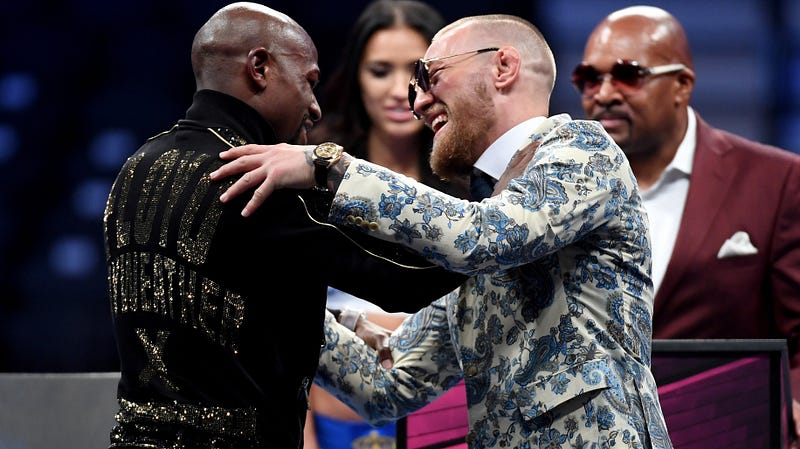
In what was billed as one of the biggest sporting events in history, Floyd Mayweather vs Conor McGregor has come and gone. It’s undoubtedly broken PPV records and generated a level of hype beyond that seen in either boxing or MMA thanks to all the casual interest. All involved with the event are also walking away with epic paydays. Indeed, as a friend put it, McGregor is walking away from his debut with a record of 0–1 yet with more cash than many fighters see in their entire careers. And Mayweather, who took the lion’s share of the revenue, of course walks away with his 50th W on his record complemented by 0 losses.


The fight played out largely as expected. That is of course if you weren’t a McGregor fanboy, or sections of the MMA media, whose skewed analysis and narrative were without doubt the most irksome aspect of the fight’s build up (that’s not referring to actual MMA fans who unlike the aforementioned actually took a measured and knowledgeable approach and analysis to the fight).

Most anticipated Mayweather would take a few rounds to shake off any ring rust, gauge McGregor’s game plan and establish his range. Consequently, he’d become more elusive to McGregor’s offensive, adopt a strategy of attrition and start landing shots at will to close the show. Despite McGregor being stopped in round 10, Mayweather could arguably have put those combinations together from round 6, when McGregor was now clearly fatigued, and with the same conclusion.

For his part, McGregor didn’t present himself as Mayweather fodder en route to a pay day. He came to another man’s sport and fought under Queensbury rules. He showed a solid chin and above all a self-belief that was second to none in contrast to Mayweather’s previous opponents. He really felt he could cause an upset and convinced many people of it too. Despite being immovable from a likely victory for Mayweather, I admittedly found McGregor’s self-belief and master salesmanship incredibly convincing. Nevertheless, he was fighting a pound for pound great in a sport that he had no professional experience in.

It would be remiss to dismiss his pedigree and success as a fighter, let alone to not expect some of that to transfer to his preparations for Mayweather. But this is boxing and like any sport there are levels. And a novice to the sport, just as a boxer would be in MMA, simply isn’t on the level of a pound for pound former champion, even in retirement. So what did we actually learn from this fight? The answer is not much that we didn’t already know.

Both fighters’ compelling promotion prevented logic prevailing for the deluded factions of the McGregor supporters who felt this was a 50–50 fight or worse still that Mayweather would fall victim to McGregor’s left hand. What they failed to appreciate was that the fight was on Mayweather’s turf of boxing. Aside from an unorthodox style that would require a few rounds to read, there wasn’t anything McGregor could bring to the fight that Mayweather either hadn’t already experienced or didn’t know how to neutralise.

To think otherwise was what caused the ire of so many of the boxing fraternity. They felt their sport wasn’t being respected by MMA fans insofar as the belief that a novice would be able to do what 49 others, who had dedicated their lives and careers to the sport, were unable to achieve.

As a result, many viewed this fight as boxing vs MMA, a notion as inequitable as sprinting vs long distance running or rugby vs football. Simply because the respective disciplines may present some commonality, that doesn’t make such direct comparisons viable. I’m sure McGregor knew this yet dared to dream for which he should be commended. Alas, many others did not.

The internet will be a better place without the fanboys whose comments, void of objectivity and full of ignorance, have littered comment sections and social media since this fight was announced. Unfortunately, still not convinced that their man was conclusively defeated, some still remain delusional.

The same goes for sections of the media. As boxing journalist Steve Bunce commented of the MMA press, some reports would suggest that McGregor’s training had transformed him “from raw novice boxer to some type of creation that is part Stephen Hawking and part Clubber Lang.” If anything, the subsequent result will perhaps in future inject some reality into such sentiments.

The dust has settled and both fighters are even richer than they already were. McGregor may not have achieved the unthinkable, in what was a lofty yet admirable aspiration. Although he has earned the respect of a boxing fraternity that has long held a chip on its shoulder with the success of MMA as a fellow combat sport.

McGregor was noble and gracious in defeat and showed respect to the sport that provided the landscape for his loss. His profile has also risen in the mainstream without an adverse effect on his stock within the UFC. Mayweather, who had less to gain besides the pay day, also leaves with his legacy unscathed and a 50th, yet meaningless (given the opposition), W on his record.

As for the spectators, they were provided with an event full of fanfare and an uneventful fight that could have been worse. And were they hoodwinked? Probably not. The outcome was there for everyone to realise from the outset. It just depends on what they chose to see.
SHARE:

Sunday, 13 August 2017

My first big fat Indian wedding

When my wife first told her family she was in an interracial relationship with a black man, it's fair to say it was met with some trepidation. Her community’s insularity had provided barely any exposure to black people beyond negative stereotypes and that in turn had served as the basis of culturally institutionalised prejudice.

But above all, their qualms were driven by a concern that relationships were difficult enough for a couple from the same community. To them, an interracial relationship meant espousing that commonality and not understanding each other’s culture. That meant an additional but unnecessary layer of challenge to a relationship.

In retrospect, they’d acknowledge all their concerns were unfounded. Although they were almost proved right when I was faced with my first big fat Indian wedding. I’d been to other Indian weddings. Yet this was the first where I was attending as a close family member and it gave an insight into an aspect of my wife’s culture that I just couldn’t fathom.

You see, this wasn’t just a wedding, it was an extravaganza. A series of events spanning over a week, both building up to the wedding and subsequent to the big day. None were on a small scale either. As a relative newcomer to the culture, it was sometimes fascinating to observe. Nevertheless, I just couldn’t get my head around what I was actually experiencing.

First, there was a ceremony where the bride’s family ‘officially’ invited the groom’s side to the wedding. This was despite the couple already being married (their civil ceremony, the only aspect of their wedding that was on a small scale, was weeks prior to the Indian wedding). Given the necessary planning, the fact a wedding was occurring wasn’t news to anyone either.

I was on the groom’s family’s side and there was a religious ceremony with our side prior to the wedding. It was quickly apparent that none of the groom’s generation (including the groom himself) had any idea what was going on and weren’t interested either. Meanwhile, the elders had no definitive version of what was supposed to actually happen either. As a result, it descended into somewhat of a palaver. The generation that cared couldn’t agree on what was supposed to happen and the generation that didn’t care became visibly nonchalant to what was happening.


There were more social and secular events, such as the mehndi party, that were a good opportunity to casually interact with guests from both sides and outside of the formalities of the wedding. But they also added to the layers of wedding festivities. With a big wedding, there was also increased wedding politics and increased stress for all involved with the planning. As the wedding approached, I’d never seen the groom, a jovial wind up merchant and happy-go-lucky chap, looking so stressed with the rigmarole of it all.

The week of festivities was enjoyable, as most weddings are, but tiring. As the number of events began to take their toll, still happy countenances, including those of the couple, were now tinged with and betrayed by fatigue.

I considered my own wedding as my main reference point and the contrast was stark. I don’t recall my wife or I ever being stressed throughout the planning and our wedding spanned one day. Ceremony, wedding breakfast and a party at the reception. Bish, bash, bosh. I felt we had a fair amount of guests (although my wife insisted that it was a small wedding by Indian wedding standards). Whereas the groom of this wedding jokingly conceded, as truth said in jest, that he didn’t know half the guests even on his own side. That’s unsurprising given one function had in excess of 800 guests in attendance.

Try as I might, I just couldn’t rationalise a series of events of this scale being a feature of a wedding of any culture. My wife largely shared my stance but being of the culture herself, she just accepted it; something I wasn’t able to do. Aside from my wife having to listen to my repeated incredulity, did it cause a problem? Not really unless you count her becoming fed up of listening to me.

It got me thinking about how these customs had managed to endure generations of the diaspora that were increasingly distanced from the land where they originated. There’s much of my West Indian culture that I cling onto, and will continue to do so, alongside my culture as a British born black man. I would support that for any diaspora community. Though within a traditional Indian or South Asian wedding, there doesn’t appear to be as much influence from British society and norms as one might expect. Which is surprising given how long the South Asian community has been present in the UK.

Any suggestion that the diaspora eschew their roots would be both foolish and culturally insensitive. But what of bridging the gap between British society, a culture that most are more au fait and wedded to, than that of their roots?

Take the duration. A week’s worth of wedding festivities is a huge imposition on a guest in considering leave from work and other commitments. Even with functions in the evening, that’s still an imposition on people’s time when it’s not just once but a repeated demand on one’s schedule.

The customary and expected effort made by wedding guests in just looking the part has to be repeated several times over for an Indian wedding. Ask any female attending a wedding of the endeavours that go into getting ready for a wedding of any culture and then multiply that several times. While my wife enjoys wearing traditional Indian clothes (as did I during the week’s functions), she and most Asian women can attest that wearing a saree doesn’t come close to the ease of wearing a dress or a suit so you can imagine the effort required when it’s for a series of events.

Then there’s the cost. In austere times, traditional Indian weddings are bucking the trend in pursuit of grand affairs but surely not everyone can afford it. Indeed, I’m sure many have provoked the ire of Indian Bridezillas in not sharing their enthusiasm for, or suggesting scaling back from, their ideal wedding scenario despite its accompanying spiralling cost.

I wouldn’t want to see the visuals and overall sensory experience of Asian weddings diluted and it’s important that it isn’t. The clothes, the colours, the music, the food and the nod to past traditions. They’re all part of the culture that need to be preserved and celebrated. However, as another generation of the diaspora are charged with taking these customs forward, I’m not sure how much longevity Asian weddings can experience in their current format.

While I would have been willing to have an Indian wedding had my wife wanted one, there’s no way I would have agreed to the endless number of guests, many of whom neither of us knew. Nor would I have agreed to the number of functions that has become standard practice. And I definitely wouldn’t have been happy with the bill for it all either.

As the Indian and wider South Asian diaspora becomes more removed from its roots and further connected to western ideals, I imagine Asian weddings will see a similar trend.

The next generation of the diaspora, whose then elders are now having weddings that they themselves are disconnected to, won’t share the desire for a big Asian wedding. And with a slow, yet visible, increase in interracial marriages within the Asian community, weddings are likely to reflect this too.

Preserving the diaspora’s culture is important and necessary. Though at what cost does manifesting that come when its conduit is a traditional wedding that’s out of step with everything else the couple know?
SHARE:

Sunday, 16 July 2017

Let’s accept Mayweather vs McGregor for what it is

When Floyd Mayweather vs Conor McGregor was announced, my first reaction was it was a mismatch; one that disproportionately favoured Mayweather but would have an entertaining build up and generate a lot of money. That isn’t to throw any shade at McGregor but he’s taking part in a sport that he’s never competed in against a fighter considered a pound for pound great. If those odds aren’t stacked against him, I don’t know what is.

Nevertheless, the fight presents some intrigue, less so around the result which is roundly expected to convincingly go Mayweather’s way, but in what it represents in potential commercial success and an analysis of the overall event.

Firstly, this fight needs to be accepted for what it is in a commercial endeavour rather than a sporting one. Indeed, aside from trying to generate further hype and anticipation, I expect the delay in negotiations was more about how they could generate the most income and deciding what each fighter’s revenue streams would be. Both Mayweather and McGregor have a well publicised penchant for money and as I previously predicted, post-retirement Mayweather’s lack of fight income means he has little to offset his gambling debts, apparent poor business acumen and financial management. That’s also now compounded by an IRS bill.

The fighters may argue otherwise but there’s little legacy to fight for here. A Mayweather victory means he beat a 0-0 fighter from another sport. This fight is about money first and bragging rights second.
McGregor in Bantersaurus Rex mode
Consequently, entertainment and generating interest is high on the agenda. The first presser was entertaining with Mayweather probably edging McGregor in the banter stakes but the subsequent presser in Toronto was a 10-8 round to McGregor who put in a bant-tastic display that echoed Muhammed Ali in his prime. As a fellow fight fan put it, McGregor had more zingers than KFC. However, after Toronto, New York and London were mediocre to say the least.

New York and London represented a pantomime akin to that expected from WWE but one that was crass and desperate. After Toronto, the world tour had run out of steam. It was gassed like a fighter in the championship rounds that had neglected their cardio in training.

I’d go as far suggesting the Toronto presser will remain the main event and high point but what of the fight itself? I can only see a Mayweather victory and all the evidence points towards it.

Combat sports aficionado and multi discipline participant, David Dennis, shared some of his thoughts on the fight and agreed that all roads lead to a Mayweather victory. A wide UD points decision where McGregor is toyed with for 12 rounds, made to repeatedly miss in a defensive masterclass from Mayweather, or a TKO, probably with McGregor walking onto a shot similar to the check hook that saw Hatton hit the canvas when he fought Mayweather, were both scenarios we envisaged. Furthermore, McGregor could even see himself disqualified if his muscle memory reverts to type as he forgets that he’s now operating under Queensberry rules rather than MMA where his fists are the only permitted tools.

Mayweather’s fragile hands probably won’t allow for any meaningful power punches and as the bigger man, McGregor may be able to use his size and grappling experience to rough Mayweather up on the inside. But the chances are Mayweather’s too smart to allow him to get close enough to do that. Anything can happen in boxing and if McGregor lands a big left, Mayweather could be in trouble. Although the likelihood of that is slim, albeit not impossible. As David put it, “Floyd really is as good as everyone hates to believe he is” and he gave McGregor a 2% chance of victory.

David added further insight into the commercial value of the fight with PPV buys perhaps being eroded by boxing purists who have shown much vitriol toward the fight, more than I previously expected. Oscar de la Hoya, promoting Canelo vs GGG as a genuinely epic fight only a matter of weeks later, has been very vocal against Mayweather vs McGregor (which will undoubtedly eat into his own PPV buys). Many of the traditional boxing press, who already felt Mayweather’s braggadocio was unwelcome in the sport, are similarly against it.

Boxing has admittedly had a chip on its shoulder when it comes to MMA, primarily UFC with its commercial success. For many within the boxing community, this is a fight that is not only boxing vs UFC but also one that they will turn their backs on as a brash Irishman attempts to hijack their sport.

That leaves the casuals, the intrigued and McGregor fanboys to make up the bulk of PPVs buys. Yet in McGregor especially, boxing and UFC’s premier salesmen and self promoters will certainly maximise those numbers to an extent beyond much else seen in either sport.

McGregor does provide some intrigue insofar as he presents Mayweather with a type of opponent that he’s never faced. Certainly more outlandish, a better self promoter, more braggadocious, void of fear of Mayweather and with a self-belief that he really can win, McGregor makes for a great rival. It’s just as well because that translates into promotional hype to sell the fight. It just doesn’t translate into fighting ability in a sport that McGregor’s never competed within.

Both fighters presumably realise this fight is a spectacle but one that will make gargantuan amounts of money. As spectators, we too need to realise and accept that. That means enjoying the inevitable entertainment that we’re likely to get, albeit outside of the ring, and appreciating the fight for what it is.
SHARE:

Monday, 3 July 2017

Is cheating subjective?

Within a monogamous relationship, cheating is generally considered a big deal. How many relationships have been terminated by one party who feels wronged by the other for their undermining of what was an explicit contract of exclusivity as partners? Nevertheless, the free will that allows someone to cheat is the same free will that underpins our decision to enter and remain in an exclusive relationship and to rightly leave a relationship when it isn’t working.

I’ve always seen cheating as fairly black or white. It’s taking part in intimate or sexual and physical acts, or establishing intimate relationships that go beyond platonic, that undermine your partner while in an assumed exclusive relationship. You’ve irrefutably acted in a manner that breaks the contract of your relationship. I’d argue it's not that complicated yet it’s often made to be.

There’s also an imbalance in how cheating is perceived. It’s certainly a transgression but there are more severe offences within a relationship such as physical, emotional and mental abuse. However, it’s seen by many as being on par with these or worse (although it can sometimes take the form of emotional abuse based on one party’s wrongdoing).

‘Thou shalt not commit adultery’ is even one of the ten commandments; managing to make the list above obvious omissions such as child abuse. On reflection, the origins of the perceived sin of infidelity is probably skewed and more to do with patriarchal control of women than preserving or promoting a sanctity of monogamy.


Millennials and Friends fans alike will be familiar with Ross’ protests against what Rachel perceived as Ross cheating because in his eyes, they “were on a break”. And while he perhaps showed some insensitivity in how quick he was willing to be intimate with another person, he was nonetheless a free agent as the basis of his defence.

Break or no break, in Rachel's eyes Ross had cheated. And in reality, cheating is perceived differently within many relationships. When I asked my wife if her stance on cheating was the same as mine, she articulated a much broader response. So much so that it made me wonder how many people might have inadvertently cheated based on her explanation.

In addition to my fairly straightforward definition, she felt cheating could depend on a given context. She opined that if a couple were having problems and one person had a rendezvous outside of the relationship, even without an intention of pursuing an affair, that would be considered cheating. I was pretty confused. If it was with the intention of cheating, then I could understand her stance. But why would it be cheating when you didn’t have the intention of an affair?

Her argument was that the act of meeting someone else was still facilitating infidelity when said relationship wasn’t in a strong place. Therefore you’d be inviting the opportunity to be unfaithful. “What if you aren't having problems? Would it be ok then?” I quizzically retorted.

“Then it's fine but you should still tell the person you’re meeting that you're in a relationship so there's no scope for any temptation or for anyone being misled. If you don’t, then you’re establishing a basis to cheat which in principle, is the same as cheating” was her response.

I was equally baffled and intrigued by her logic and presented her with a scenario of me innocently talking to a woman at a bar but without declaring I was in a relationship. Maybe we’d even exchange numbers because we had a personal or professional connection. Well, that was a definite no-no she said. “And what about the same scenario but with another man?”, I asked in preempting an answer that would likely highlight a double standard.

“Well, that would be ok because I know there isn't a chance that you’d be involved with them” she replied.

Like other women who've expressed similar views, hers is a stance that's likely to be more underpinned by insecurities, stereotypical depictions of men, emotionally led ideals of monogamy and probably hours of Sex and the City. Yet it’s one that other women seemingly share in a broader definition of infidelity than that shared by many men.

It reminded me of an episode of King of Queens where Doug confronts Deacon about his suspected cheating against his wife Kelly. Deacon, racked with guilt, tells Doug he's just been going to dinner with another woman and talking but nothing has happened between them. Doug’s relieved that his friend hasn't been unfaithful and assures Deacon that he’s not done anything wrong. Although when Doug excitedly tells his own wife, Carrie, she has a very different view that still sees Deacon’s actions as representing misdemeanour. And sure enough, my own wife agreed with her.

So why isn't there a universally accepted ideal of cheating? And how has it come to be so subjective? Do those of us with a narrower view of what it constitutes maintain that view because it subconsciously grants us more freedom within the constraints of monogamy? Or do others, regardless of gender, maintain their far-reaching stance because it provides an iron-clad defence of their emotions, even when irrationally so?

When you consider the social construct of monogamy, rightly or wrongly, our defence of our emotions and insecurities certainly lends itself to bolstering its validity. Furthermore, it makes relationships units that we can become insular within because of a fear that even innocent conduct outside of it could be considered a breach of the contract of our relationship. Deacon felt guilty because he'd been talking to another woman. Nothing more. And while he may have been tempted to take that further (which probably added to his guilt), he didn't. So what had he actually done wrong?

Cheating isn’t compatible with a monogamous relationship but where do we draw the line between innocence and transgression? Just think of how many couples have experienced jealousy and relationship problems because of interaction with a platonic friend. In an age of social media, where insecurities can be played upon in ways that were once unimaginable, the blur of that line is further exacerbated. The upshot is there is less trust within relationships because we allow modern society’s projections of what constitutes an infraction within a relationship to permeate our own relationships. That lack of trust can’t be a good thing but while cheating remains subjective, that’s unlikely to change.
SHARE:

Saturday, 24 June 2017

We need to talk about Grenfell Tower

“either they don’t know, don’t show or don’t care about what’s goin’ on in the ‘hood”

That was Doughboy’s poignant monologue from Boyz N the Hood. It’s fairly apt for anyone or any community that has felt their existence has been ignored by their government and wider society. But I cannot recall a time when it resonated more than with the Grenfell Tower fire, the actions and neglect that caused it and the subsequent handling of the incident.

Every resident of Grenfell Tower has lost everything and the death toll is expected to rise. The crude reality is that the scores of people that haven’t been accounted for have already perished and are in the building. When you look at the probable numbers of residents that were in the building at the time of the fire, and the number of survivors that have identified, it’s a given that the balance are bodies that are still in the building.

The Royal Borough of Kensington & Chelsea Council (RBKC) and the government will be well aware of this and I imagine have directed that bodies shouldn’t be removed en masse given their desire to stifle already negative media and public reaction to the fire. Not advising the media and public of this is a likely ploy to quell anger, while downplaying the extent of the tragedy in the hope that media scrutiny will lessen, and to give false hope to the victims’ friends and families.

Instead, a periodically rising death toll every few days, with bodies being removed from the building on a similar basis, doesn’t show the scale of what’s happened. It’s a strategy void of empathy and one that puts PR before compassion and ethics. However, it’s a likely one that some firefighters have concurred is happening, albeit not being confirmed officially.

The official and immediate cause of the fire is yet to be identified and it could be months before it is. Although if the Grenfell Tower fire was an accident, the attitudes, neglect and actions that led to it certainly weren't.

I’m pretty familiar with North Kensington and Grenfell Tower has been a fixture of the Ladbroke Grove skyline all my life. Now, the burnt out shell of a building is juxtaposed against the luxury apartments, coffee shop chains and middle class residences as a last stand of the old North Kensington that succumbed to the flames of neoliberalism and neglect.

As gentrification spread throughout the area as an aggressive neoliberal cancer, Grenfell Tower was nevertheless a reminder of the area’s previously working class, ethnically diverse identity. Perhaps too strong a reminder for RBKC as they sought to dilute the old identity, making it more palatable for the middle class residents they were trying to court and those who already lived there.

So much so, that when the block was refurbished, cladding fitted to the building was sought to make it more aesthetically pleasing to the wealthier neighbours in the vicinity. The same cladding that was deemed responsible for the fire spreading so quickly.

It’s been claimed that using fire-resistant cladding would have cost £2 more per panel at an additional cost of £5000. However, the contractors responsible for the refurbishment opted not to spend the extra cash. Why? Because a social housing block, home to low income, working class residents wasn’t deemed worthwhile.

To RBKC, the price of these residents’ lives is cheap. They didn’t deserve adequate social housing. Their residence was seen as an eyesore in any event. And with that, it’s safe to say that the fire, the deaths, the loss of everything for the residents, is down to ideologically driven neglect, disdain and disregard by RBKC and the wider political class.

RBKC is a Conservative controlled council with a smattering of Labour seats, represented by dedicated councillors who will always find themselves outnumbered on the Council, in the working class pockets of the borough. Ideologically, the borough is conservative through and through, something that’s permeated the Council’s management and senior officers too, and could be considered as being in the vanguard of local authorities when it comes to delivering Conservative national policy. That means social housing and deprived communities, some of the most vulnerable people in society, couldn’t be less of a priority.

Throughout contemporary history, RBKC has considered North Kensington as an unwanted annex to the borough and the Grenfell Tower fire somewhat manifests their stance toward the area. As Ra’s al Ghul sought to let Gotham burn to rid it of what he and the League of Shadows deemed as undesirable, RBKC and the government have literally facilitated the same conclusion for Grenfell Tower and its residents in their stance on social housing and the provision of quality housing for the most deprived in society. And if there was any doubt of this, their respective responses to Grenfell Tower have refuted otherwise.

Theresa May visited Grenfell Tower but she didn’t visit victims who have lost everything. She doesn’t care about them. If they were mostly white, middle class victims only a stone’s throw away from Grenfell Tower in the luxury apartments or multi million pound houses nearby, she’d be consoling, shaking hands and hearing stories before a sincere and impassioned public announcement of immediate action. Meanwhile, Jeremy Corbyn, a man that the media and the right have claimed isn’t prime ministerial, had the compassion to visit victims, speak to them and console them. Even the Queen and Prince William attended, genuinely moved by what they’d seen.

Similarly to May, RBKC’s presence has been minimal and in no way meaningful. As far as May, the government, RBKC and the establishment, like Doughboy said, “they don’t care about what’s goin’ on in the ‘hood”.

This is our Hurricane Katrina. An inept leader representing the party of the privileged, lessons of risks for the location (or in this case construction) of housing for low income residents being ignored yet exacerbating their fate and a beyond lacklustre response by the government and public agencies. And that nonchalance being fuelled by a disdain and disregard for the most vulnerable people in society who are instead left helpless. The parallels are eerily familiar. Even images of Westway, providing refuge to now homeless victims, have shades of the Louisiana Superdome providing shelter for evacuees. And all the while this is happening in the fifth richest county in the world.

Where the state failed, local people rallied to assume what should be the state’s role. Local resident and club owner, Ben Bolton, altruistically opened his warehouse and club for donations to be housed and organised by volunteers. Within two days, over 60 tonnes of donations had been received and sorted and Ben is delivering goods to families directly and around the clock, based on exactly what they request and need.

Working with Ben, Beth Foster has amazingly organised training and laptops to donate to surviving victims who are now homeless and immediately began fundraising to help victims with cash they can be given directly. Local resident Reece Saint had barely slept in the three days following the fire, volunteering in any way possible to provide any modicum of relief and sanctuary for the victims that were still alive. They are all a microcosm of the heroic, inspiring and incredible generosity seen in the aftermath of the fire and of local people fulfilling a role and responsibility that the state has shirked because they don’t care about the people who need their help.

When you walk through Ladbroke Grove, the feeling of grief and distress now turning to anger is palpable. If victims of the fire and local people didn’t know they were considered second rate residents before, they do now. Kensington Town Hall was subject to protests fueled by indignant anger at the lack of RBKC’s response but that’s also being directed at the government. It’s that indignation that could result in worse as the have-nots realise just how little they have and how their status quo has been exacerbated by the same attitudes that led to the Grenfell Tower fire. I previously questioned if society was so jaded with socio-economic inequality that it no longer had the inclination to revolt. This could be an instance where the answer is a definite no.


If you’d like to donate to the relief efforts, please do not donate to anything related to RBKC or the government. The needs of the victims can change daily but local groups are best placed to identify and advise on what is required. If you’d like to donate directly to the victims of the fire, you can donate here as a trusted recipient of any donations received www.shareagift.com/Pages/18630 Any donations received will also be matched by Google.


SHARE:

Sunday, 11 June 2017

Even without a Labour government this election was a victory

As the dust settles in the wake of the general election, the political landscape is not what it was when the election was called on 18 April. Theresa May, full of what we now know was hugely misplaced hubris, was confident in a whitewash. A landslide victory that would decimate Labour, capitalise on the Conservatives’ lead in the polls and maul an opposition leader in Jeremy Corbyn who didn't have the backing of his own MPs. Nor did he seemingly have the backing of an electorate that appeared to lack an appetite for his left-leaning policies. And there was no need to make an effort in bashing Corbyn and assassinating his character as the media were already doing it. They were providing the familiar narrative that Corbyn was unelectable and would be bad news for Britain.

Jeremy Corbyn speaking at the Labour Party General Election Launch 2017 by Sophie Brown is licensed under CC BY-SA 4.0
While Labour supporters backed Corbyn and his policies, and the marked departure from the Blairite era that so many of his shortsighted MPs yearned to return to, many of us struggled to be optimistic about Labour experiencing success in the election. I include myself in that. I wanted to see broad support within the electorate for the policies and ideals I believed in but I just couldn’t see how the tide could change before the election. We’d effectively allowed the establishment and media narrative to become a self-fulfilling prophecy.

Much of my earlier doubt over this election came from precedents in politics of late. Take Brexit and the election of Donald Trump. Usually moderate societies had opted for radical, right-wing and ill-considered choices in the voting booth. Wouldn’t a convincing re-election of the Tories therefore be a logical conclusion?

For May, calling an election wasn't a political gamble, it was a no-brainer. Increase your majority and get a mandate for a hard Brexit with the ability to claim that it’s what the country voted for. Yet unbeknownst to May and many others, the electorate didn't get the memo.

As campaigning began, there was a palpable shift within the electorate. Labour was gaining on the Conservatives in the polls and Corbyn's popularity was surging. This wasn’t part of the plan for the Conservatives and their assumed increased majority didn’t seem so sure after all. The youth vote was being mobilised and in a significant first for a British election, the ‘grime vote’ was too. Traditionally apathetic sections of society were planning to vote and it would be a vote for Labour.


Like a sure fart that actually followed through and materialised as an unanticipated poo, there was now no turning back. But May and the Conservatives had now politically soiled themselves and everyone could smell it.

The morning after the election, what might have been tears shed over Labour taking a shellacking at the polls was replaced with jubilation. It was a hung parliament so Labour hadn’t won the election. They hadn’t even won the most seats; the Conservatives had. Nonetheless, this was a victory for Labour, and indeed Britain, on so many more fronts than being able to form a government.

When you consider the respective campaigns of the Conservatives and Labour, the former’s was beyond lacklustre and Alan Partridge-esque at times. This was not the campaign of a party that was expected to win big and was riding high in the polls. It was the campaign of a party whose support had been seriously eroded and it took the election for everyone, including them, to realise it.

Conversely, Labour’s manifesto was applauded and it was clear that it was underpinned by a desire for a fairer Britain. Supporting Labour was considered the right thing for a better Britain.

The Conservative manifesto, however, was lambasted and they were forced to make a U-turn on the so-called ‘dementia tax’. Beyond disliking the Tories, the public really didn’t like Theresa May either. Calls of her being a bottle job for refusing to debate Corbyn became common and she didn’t seem to be resonate with anyone. She was mocked on social media and her claims of representing strong and stable leadership became more laughable by the day.

I don’t know one person who articulated in person or via social media that they were voting for the Conservatives or even vague support of any of their policies. Not one. That’s probably more of a reflection of my circle but it’s a first in any election I can recall. Usually there’s at least a few lost, middle class minorities working in finance or similar (did somebody say Priti Patel?) who’ll openly back the Conservatives but this time they’ve also piped down.

Admitting to voting Conservative was something people were seemingly ashamed of because voting Conservative was now roundly considered synonymous with being selfish or deluded. Or being a douchebag who was voting for a fellow douchebag. Douchebags who represent the privileged few with unchecked and encouraged greed at the expense of the less fortunate. If I wanted to vote for the Conservatives, I’d be ashamed too.

The Conservatives’ label as the ‘nasty party’ was back and in full effect. People had seen the Conservatives for what they are and they didn’t like it. Consequently, they stopped listening to the media’s narrative about Corbyn and started making up their own minds. They decided that they actually liked Corbyn and what he stood for and supporting him became en vogue.

The alternative Corbyn presented was credible and underpinned by a fairness and integrity that couldn’t be argued against without being seen as a wrong’un. Modern politicians can rarely engender such support organically. Although here, a left-leaning agenda had managed to garner sizeable endorsement that clapped back against the establishment and the media and dispelled the myth that such politics couldn’t experience support from the public.

Corbyn managed to convert apathetic sections of British society into electors. After years of being eligible, this election was the first that some people had ever registered and voted. They finally felt there was a party with a leader that could make a difference and was worth their vote. That’s a major endorsement and measure of Labour’s success.

For the Labour MPs who didn’t back Corbyn, like the media they too now need to pipe down. Calls of Corbyn being unelectable hold little weight when Corbyn being the leader probably saved some of said Blairite MPs’ seats. Oddly, many of them don’t seem to have an issue with Uncle Jezza now either.
“you’re also missing your majority…”
As Ned Flanders would say, May and the Conservatives are now faced with a dilly of a pickle; one that is the gift that just keeps on giving to Labour. May has refused to resign, despite leading her party to a sham result that has lost them their majority. So much for being strong and stable eh? Her position is untenable, her own MPs will now be against her and she has lost their respect.

The electorate and the Conservatives will increasingly resent May for staying on and what little authority she thinks she might have is dwindling by the day. Corbyn will therefore become even more attractive as Prime Minister the longer she remains and continues to dig her heels in. Given her government will fall and she will either resign or be ousted imminently, he’ll soon get another chance to prove it too.

Without a majority, May has also been forced to enter into a confidence and supply deal with the Democratic Unionist Party (DUP) It’s essentially an arrangement where the DUP will support the Conservatives in voting with them on key issues. If the Tories wanted to lose the tag of the ‘nasty party’ that lacked ethics, a deal with the DUP has just seared it into their skins like the Dark Mark of the Death Eaters.

For anyone not familiar with the DUP, their socially conservative stance on a few matters significantly calls the ethics of the Tories into question with their new arrangement. They oppose abortion, are staunchly and openly homophobic and are climate change deniers. Oh, and they’re backed by terrorists in the Ulster Defence Association (UDA). That’s right, terrorists.

After May’s claims that Corbyn was a terrorist sympathiser (he actually said that he condemned both the loyalists and the IRA), she’s actually sought an alliance with a terrorist backed party. You couldn’t make this up. Nor could you envisage such desperation. May has also undermined the Northern Ireland peace process by entering into an agreement with the DUP as the British government will hardly appear impartial in Northern Irish negotiations when they’re backed by the DUP.

This only serves to reinforce the ethical vacuum that is the Conservative Party and the lack of moral fibre within Theresa May. You could despise Corbyn but right now you can’t deny he isn’t a more appealing Prime Minister than May on morals and ethics alone.

May argued that the snap election was a way to ensure she had a strong hand in Brexit negotiations. Well, that’s backfired, hasn’t it? Contrary to popular opinion, I’ve maintained that Brexit, or at least a remotely hard Brexit, may not be realised due to the outlandishness of any potential deal and how much of a disaster it would represent for Britain. But with this election result, May has edged Brexit that bit closer to the long grass. How’s she going to push ahead with Brexit negotiations now? With the DUP’s goons bringing a new meaning to the position of Chief Whip? For we Bremainers, May has possibly done us a favour because Brexit isn’t moving anywhere with her at the helm. So much for her aspirations in using it as a xenophobic and ideologically driven vehicle for Tory ideals.

Millennials may not remember the economic and social scars of Margaret Thatcher’s governments but they captured exactly what the Tories were, and still are, about as a party of the privileged that has often been on the wrong side of history. Theresa May, a far less adept politician than Thatcher, has now managed to create her own narrative that also shows a new generation their true colours.

Today’s Conservative Britain is a Britain where food banks and poverty are accepted alongside crippled public services, underfunded schools and a health service being primed for privatisation by stealth. Meanwhile, the Conservatives ignore the tax evasion and aggressive tax avoidance of their backers and friends. However, the electorate has finally realised this and rejected it. Presented with Corbyn’s alternative, they’ve expressed their preference for the latter in their droves.

So Labour didn’t win the election and Jeremy Corbyn isn’t the Prime Minister. Nevertheless, Labour and its supporters have much to celebrate and it’s a new day for Labour and British politics with the foundations for a better and fairer Britain finally being established.
SHARE:

Sunday, 7 May 2017

Light beyond the clouds

Depression. It isn’t just an occasional feeling of unhappiness that typically passes within a few days of its onset. Indeed, sometimes feeling low is a normal and expected feature of our emotions. On the the contrary, depression can be a debilitating, sustained feeling of dejection and despondency that permeates every aspect of your life and try as you might, you just can’t shake it. Millions of people can attest to this and I am one of those people.

I can’t put a finger on when I first started to suffer from depression. Initially, I accepted this feeling as a part of me so I didn’t attempt to address it. I didn’t even label or acknowledge it as depression. It was a feeling that I became so familiar with that trying to address it seemed as futile as changing who I was.
I find it near impossible to articulate how depression feels. There’s an emptiness and darkness that is omnipresent to your life. I would often liken it to a dementor or a dark, ominous cloud that refused to go away and would spoil anything remotely pleasant. Regardless of how hard I might try to ignore it, that dark cloud would remain to remind me that my depression hadn’t gone anywhere and could become heavier and darker whenever it chose to.
There was no escape from that cloud. I would wake up and it would consume my absolute first thoughts in reminding me of how I was supposed to feel. Depression wouldn't even give me any respite in my initial waking moments.

It was akin to opening your front door and stepping out into darkened skies every single day. My depression was telling me I should accept and get used to it because that would be my experience indefinitely. All day, everyday. Depression was conditioning me to not even expect otherwise and after a while, I didn't. It had killed my hope of ever escaping that dark cloud so why bother trying?

The lows of depression are so low that they can consume you and put you on a path of self-destruction. And no matter how well-intentioned, no one can understand how you’re feeling. In the depths of depression, there isn’t any hope or glimmer of light to draw solace from. It’s a sickening, crushing feeling that can cause you to lose any sound perspective and rationale that are instead replaced by helplessness, self-loathing and destructive and skewed introspection.

During my low points, I would generate the most feeble and often spurious arguments to convince myself that I was nothing. I hated myself and felt I was a loser. Although this was in contrast to the faux veneer of confidence that I would otherwise usually portray. My deceptive demeanour continued to provide a shield to anyone getting as much as a glimpse of how I was really feeling on the inside. And for the most part, I was pretty good at maintaining the act. That meant no days off work, no expressing of my emotions, no public breakdowns, no confiding in anyone and no seeking of professional or peer support regardless of how awful I felt.

I would routinely get angry at myself for feeling this way. The rage I directed squarely at myself was driven by my feeling of inadequacy and the belief that I was worthless. I would try to direct my rage into exercise and so many of my workouts would be fuelled by me trying to combat depression. Every mile ran or every weight lifted was a counterpunch to my depression. Sometimes it worked and, albeit temporarily, I would feel indestructible and impervious to depression at that moment. I was on the front foot and it was a contrast to how I’d normally feel.

Yet sometimes my depression was too powerful for me and my endorphins seemed to have no effect whatsoever. I remember running a long distance race that I had built up in my head as a showdown of me vs depression. I ran the race in a good time and felt physically strong but emotionally, I felt empty. Absolutely empty. My depression was telling me that my resistance was futile.

My self-esteem was at rock bottom and I was eroding what was left of it that my depression hadn’t already destroyed. This was based on a distorted image of myself that I was projecting in my own head, and to others on days where I felt particularly dismissive towards my own self worth. If someone enquired about what I did, I would sometimes boldly tell them that I was a loser. They saw it as self-deprecation or banter while I felt I was just being honest and it was my way of not being in denial about how I saw myself.

Rationally, realistically and relatively that wasn’t the case and had anyone realised that it was my depression talking, they would have probably been bamboozled and unable to see what I had to be depressed about. Alas, depression is often void of logic and rationale. The logical side of me knew there wasn’t anything to support my feelings. But that didn’t stop the way that I felt and there was no way logic could permeate the overwhelming feeling of despair that I was plagued with. I was alone with my thoughts and emotions in an incredibly dark place that only I could see.

Where my depression gave me a shellacking in telling me I was nothing, anxiety (often found in tow with depression) drove my obsession with feeling inferior. I was garbage and I repeatedly reminded myself of it. My depression and anxiety would tag team me in somehow generating non-existent reasons to support this idea and I’d assume random strangers were superior to me based on absolutely nothing.

I remember once seeing a nondescript commuter on the train in a fairly modest pinstripe suit. Immediately, my mind told me he was in a better job than me (because pinstripe suits confirm one’s status as being in a good job, right?), had a better life than me and was a better person than me. Within seconds, I’d built a whole back story around this commuter's life with the sole aim of supporting the narrative that I was a lesser individual in contrast to him. That was despite me having no idea of his life other than us being on the same train.

My depression was now spiralling out of control yet I avoided pretty much everything that might have put me on a path to recovery sooner.

I wouldn’t entertain any possible solution to my depression. I wasn’t hiding my emotions or my depression out of shame but out of a refusal to accept the vulnerability of the weakness I believed it presented in me. Avoiding the acceptance of that vulnerability probably did me even more damage and was probably supported by my then perspective on mental health.

Coming from a community where mental health concerns can ignorantly equate to being “sick in di head” and being of a working class background where depression is often seen as something one should “just snap out of” to get on with life, on some level I probably didn’t want to address my feelings openly or internally. So I didn’t. Instead, I accepted them. I decided that feeling this way was how I was supposed to feel. I had to accept the internal and emotional darkness, no matter how much it affected every facet of my life. With punishing consequences to my mental health, I decided to continue on that basis.

As a man, there was probably another obstacle I was placing in addressing my depression in avoiding a label of being weak and unmasculine. It’s a problem that males face increasingly as the gender roles we’re subject to in society still disseminate a message that we shouldn’t talk about our feelings let alone have any feelings that might suggest any weakness. Suicide is the biggest cause of death of men under 45 in the UK and 75% of UK suicides are male. Yet when it comes to mental health, men are keeping the lid on a pressure cooker of emotions with no outlet as the pressure only builds.

My anxiety too was worsening. I was now experiencing panic attacks and breakdowns (which I obviously kept to myself). As a result, it was becoming increasingly difficult to hide how I was really feeling. Perhaps that was down to some measure of my vulnerability coming to the fore. Conversely, perhaps my depression had just reached a point where my struggle to permanently conceal it was becoming untenable. On reflection, it was probably both.

The turning point for me in acknowledging that there was a problem came from my partner. She knew something was wrong but because I did my utmost to hide it, she had no idea what. She couldn’t empathise with me and similarly, I wasn’t able to fully detail what I was experiencing either as it had become a default emotional state for me. Nevertheless, she knew something wasn’t right and try as I might, it couldn’t be denied. Finally, after years of my depression being my secret, someone else knew and I gradually started articulating to her how I’d been feeling for all those years.

It might seem a trivial detail but this was major. I had finally admitted to myself (and now someone else) that I had a problem and had embarked on the path to addressing it.

Having told my partner how I was feeling, I unwittingly moved closer to trying to address the problem and had shed a layer of obstruction to at least some notion of recovery. Where I had once told myself I would never confide in anyone about how I felt, let alone seek help, I began to see the latter as less of an issue. It’s also where I warmed to the idea of counselling.

The albatross of my secret of suffering from depression had been lifted off of my shoulders. Seeking help became something I was open to and I spoke to men's mental health charity, CALM, who suggested counselling and our conversation was another layer removed.

With a surprising lack of trepidation and disregard for any stigma, I eventually started counselling. I wasn’t expecting it to be a panacea that would lead to me constantly feeling happy and rid me completely of any depression and anxiety and if I’m honest, I still don’t. There has to be some realism when it comes to addressing depression as unhappiness and occasional sadness are features of life. It also means that any successful recovery from depression doesn’t suddenly mean a utopian life of perpetual happiness. What it does mean is being able to deal with feeling low in a manner that doesn’t spiral into anything more than that and if it does, having coping mechanisms to manage it. 

As I was increasingly experiencing deeper depression and anxiety, I felt I had nothing to lose with counselling. I went into it with an open mind and was probably so emotionally drained from my depression that any resistance I might once have had was diminished.

I opted to seek counselling privately rather than through my doctor. Despite my relaxed perspective on it, I was wary of how it would be viewed on my medical records. I say that with some reluctance as in some way my attitude probably exacerbates the very stigma I was afraid of. I just didn’t feel comfortable going to a doctor with this and still maintain distrust for how a doctor might advise me to deal with depression.

Whether or not it’s an unfounded view, I felt a doctor might possibly pass it off nonchalantly, putting it down to “feeling blue”, suggesting “it’ll soon pass” or even suggest medication before exploring what was right for me. My expectations show how much work there is for even doctors in understanding how they may be perceived by a patient with mental health concerns.

Counselling was a completely new experience for me, especially as a very private person. However, I soon became comfortable with it. I’d talk about how I felt in whatever detail I offered and my counsellor would listen. He’d unobtrusively ask intermittent questions or make an observation that might gradually signpost our conversation towards some clarity. As only my counsellor knew how I felt, I wasn’t exactly straying from my usual private self either. Furthermore, I felt I was finally being proactive in fighting my depression.

It’s difficult to explain the undoubted effectiveness of counselling but it provided an environment that was free from judgement and a forum where I could safely articulate my feelings. Not to mention, it’s helped me explore some of the possible roots of my depression and anxiety. I still don’t know exactly what caused me to feel this way and depression is far from logical insofar as it doesn’t need a reason to be present.

Counselling hasn’t resulted in an epiphany where one day I realised I was free of depression. Nonetheless, I attribute counselling to the incremental but significant progress I have made in addressing my depression and my anxiety. When I look back, especially to some of the emotional lows I’ve had, the contrast in my mental health is startling.

The stigma surrounding mental health issues arguably and subconsciously affected my willingness to consider counselling sooner. There isn’t a stigma around going to see a doctor for a physical concern and it should be no different for mental health. Seeking support for mental health has nevertheless remained taboo with no validity and to the detriment of those who would benefit from that very support.

I lost years to depression. Years in being impeded from experiencing progress in so many areas of my life where depression made me stagnant. Years of not feeling good enough and inferior to everyone around me. I was suffocated by the dark cloud and it held me captive from experiencing the light that it had hidden from me for so long.

My life was effectively on hold thanks to depression. I wondered if one day I'd be free of the emotional and mental prison that unbeknownst to everyone I was trapped within (although there was no actual feeling of optimism in my thoughts). In retrospect, that was an obvious dichotomy with how I was feeling but in spite of that I told myself to be ready for that day should it ever be realised.
The Deep by Sarah Ingram (www.sarahingram.co.uk)
While our environment and circumstances can appear one way, depression is potent enough to make them feel drastically different. It’s a distorted reality but one that no one can see but you. Consequently, I’ve come to accept that amidst my experience, I’ve benefited in some way from my depression and anxiety.

Depression and anxiety has given me a perspective of the human condition that without it, I wouldn’t have. My heightened awareness of this is almost the gift that came with the curse of depression. Similar to a sixth sense, I can now see and empathise with depression and anxiety in others in a way that many are unable to appreciate. Moreover, if depression and anxiety is making someone feel inadequate or weak, I instinctively understand not to voice or project anything said depression and anxiety will feed on.

That doesn't mean concealing your own successes for fear of triggering or exacerbating someone’s depression or their anxiety, it just means having some sensitivity and empathy in what you might project. It should be a given but if someone is depressed about their finances, they probably don’t want to hear about your new Rolex. Depression and anxiety have a way of making you realise that even more vividly because that empathy is much more likely to be instinctively forthcoming.

I don’t know where my depression came from but to no avail I’ve spent years trying to reason with myself what the source might have been and why depression chose me. What I do know, but didn't always realise, is that depression didn't prey on me because I’m weak. Depression has taken me to such lows that to be able to write this today tells me I’m far from weak. I still need to remind myself of that but it's a reminder that my experience with depression undoubtedly refutes.

As a fan of combat sports, I look at some of the fighters who’ve been victim to depression, fighters I’ve supported and followed in awe of their prowess in combat yet depression has been able to metaphorically send them to the canvas. Ricky Hatton, Tyson Fury, Oscar de la Hoya to name a few suffered from depression and there are plenty from other sports.

Hatton especially has spoken of his experience with depression and being suicidal with a candidness that helps to fight the stigma around men speaking about their mental health. As a working class man too, his message resonates with me and hopefully others. Having followed his career, there's nothing weak about ‘Hitman’ Hatton whatsoever and more men need to follow his example as we fight the stigma.

My depression didn’t subside overnight and addressing it was, and remains, a work in progress; one that perhaps may never be wholly complete. What I now experience, I refer to as ‘residual depression’. The cloud might sometimes continue to be present in the background, just not directly over my head or engulfing me, and I’m better able to expedite its retreat.

I struggled on how to conclude writing this but realised that's because there can’t be a static state of happiness as a conclusion to my experience. That’s ok. Therefore I’m ok. Mental health can’t be viewed with rose-tinted glasses because that isn’t reflective of life and for most of us, our emotional well-being can’t be expected to plateau regardless of that being in a good or bad state.

Good mental health is about managing our emotional well-being and addressing the stigma of mental health conditions plays a significant factor in that. Depression, and other mental health conditions, can’t remain a taboo conversation or be perceived as weakness. It needs to be in the open so that more people suffering from depression realise they too can experience light beyond the clouds.
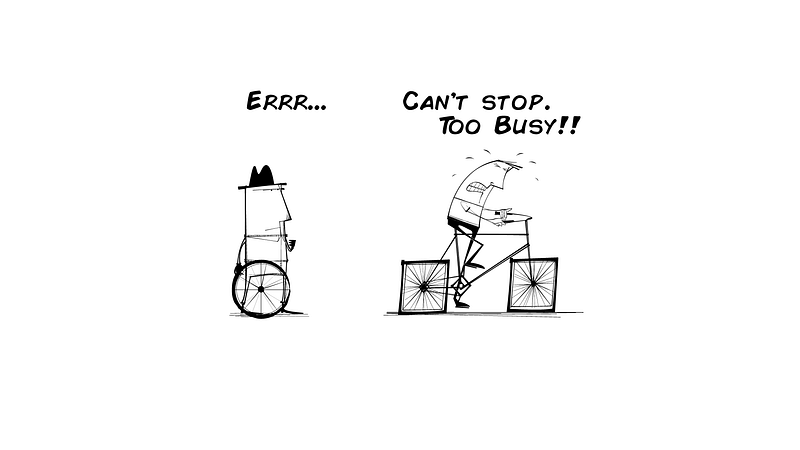
SHARE:
© iamalaw

This site uses cookies from Google to deliver its services - Click here for information.

Blogger Template Created by pipdig