Sunday, 4 March 2018

The growth of grime and UK rap

Just like their American counterparts, rappers from the UK rap and grime scene have long had an image problem when it comes to their acceptance in the mainstream. Their artistry, being born of articulating the ignored experience of deprived communities, typically makes for a grittier identity than those from other genres. Consequently, for many rappers, that persona is deemed an essential measure of credibility; so much so that many rappers will exaggerate that image when they really aren’t about that life.

Yet when that identity has met the mainstream, it’s traditionally struggled to find itself compatible with a more commercial sphere. The necessary professionalism, etiquette and maturity needed to operate beyond the periphery of the underground has often not been forthcoming from rappers. That’s manifested itself as tardiness when attending professional engagements, a distinct lack of media training (not every sentence needs to be rhetorically punctuated by “you get me?” when you’re on a mainstream platform) and an unawareness of some behaviours and vernacular just not being appropriate for mainstream audiences.
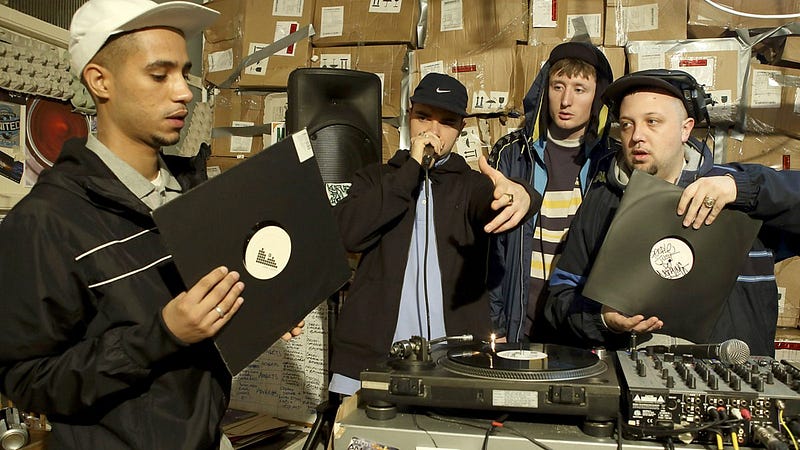
“I’m a big man but I’m not 30… oh, wait…”
Even the ability to show a lighter side hasn’t always been apparent; incredulously, there’s been an underlying view that momentarily losing one’s screwface might actually erode the perception of an artist’s credibility. It was akin to the bashment scene before the likes of Elephant Man injected some of the fun back into the genre with his colourful visuals and acknowledgement of the dancing culture within the genre.
Why so serious?
An inability to separate the road from the radio, incriminating themselves and others with reckless talk, and glamorising rather than articulating tales of the road, was once all too commonplace. Some might say said artists were keeping it real. But from a business perspective, it was keeping it real dumb.

That didn’t help the perception of the culture either. And given most rappers are black or assume the culture of the diaspora, it didn’t help the perception of the black community either (and we’re undoubtedly facing our own image problem without needing the aforementioned to compound it).

However, in recent years there’s been a shift and the scene has found a professionalism and maturity that it lacked for years. That’s provided a conduit for more artists, and the scene overall, into the mainstream and without necessarily needing to compromise with a watered down product. No longer is it mandatory to be tense at all times and even a burgeoning voice of genuine social consciousness has emerged.

It’s hard to pinpoint when or how the change came about. In the era of Chip (when he was still Chipmunk and mentioned in the same breath as Ice Kid), Tinchy Stryder et al entering the scene, major label investment in their media training was very obvious. Nevertheless, let’s not forget Chip came through via Alwayz Recording before signing to a major label. The business savvy of Alwayz Recording in knowing how to play the mainstream game was therefore apparent even before Sony got involved. And it was a similar story for others of that wave.

Tinie Tempah, one of the most commercially successful artists from the scene, quickly gained a reputation in the industry for his professionalism. In Tinie, there was an artist who was from a scene that was rapidly gaining traction and he eschewed the traits that meant the mainstream were still reluctant to engage with the artists who originated from it. He was punctual, articulate and knew how to engage his audience on a respective platform.

Newer and younger artists, who would have once been stuck with a paradigm of ignorance from previous artists, now had an exemplar on how to act accordingly beyond niche success while reaping the benefits of commercial and critical acclaim.

Achieving commercial and critical success has long been considered a challenge, just as the notion of rappers maintaining their credibility while showing a capacity for not taking themselves so seriously has long been elusive and seen as a dichotomy. The belief that these are mutually exclusive has long held back the scene but there’s been a shift in that perception to its betterment.

Giggs, undoubtedly one of the hardest and certified rappers in the scene, carries unquestionable authenticity in his bars. Yet he’s undoubtedly contributed to refuting the view that rappers need to be constantly tense. Check his Instagram account and contrary to what many might expect (and what the Daily Mail would gladly have you believe), you’ll see banter galore that in no way dilutes his credibility. Nor has his content changed in the process.

Buck, Giggs’ manager, brings similar content to his social media and like Giggs, he doesn’t feel compelled to perpetuate the portrayal some might ignorantly expect. A criticism of the scene was that its major players didn’t show any growth but Giggs and Buck show exactly why the scene has finally been able to move forward in embracing maturity without any loss in credibility.

On New Years Eve, Buck posted a video advising people to avoid any drama and to stay away from anywhere that might present avoidable trouble. For Buck to send such a positive message, but from a perspective of credibility that others might not possess, shows just how far the scene has matured and the direction it’s hopefully taking.

As the scene continues to grow, so does its social awareness. The 2017 UK General Election saw Labour make huge gains and the support of the scene and its fans for the Labour leader, accompanied by the hashtag #grime4corbyn, undoubtedly contributed to that. Although unlike some endorsements of politicians by musicians, this wasn’t a gimmick. Jeremy Corbyn’s desire and championing of social equality, juxtaposed with the inequality and growing poverty that has characterised Tory Britain, resonated with the scene.

This wasn’t faux political engagement. The socio-economic injustice of Tory Britain was something many within the scene had experienced first hand and were able to relate to. Furthermore, it signalled the advent of a social and political consciousness. Just look at how many from the scene have been vocal about Grenfell Tower, just as Stormzy was at the Brits? Whereas the dialogue occurring now would have previously been limited.

Increased unity and a willingness to collaborate has also facilitated the growth within the scene. One of the reasons southern rap experienced popularity while New York fell off was that southern rappers worked together while New York rappers wouldn’t. The UK scene has done the same and it’s brought about an attitude that means it no longer remains stagnant in its maturity.

Just as the players within it have matured, the grime and UK rap scene is finally beginning to evolve with them. While entry to the scene is typically at a young age, we can’t all maintain the mindset of our teens as we’re faced with the trappings of adulthood. Like Chris Rock said, no one wants to be the old guy in the club and the scene was at risk of becoming that old guy.

The grime and UK rap scene hasn’t lost any credibility as it modifies its outlook. Indeed, there are now artists that admittedly have a more commercial sound but that’s part of the scene’s expanding breadth. It’s also alongside the harder and signature content that it’s best known for. Instead, the scene is gradually losing the narrow perspective that long kept it in the shadows of the success and growth it’s now capable of achieving.
SHARE:

Saturday, 2 December 2017

We need to recalibrate our moral compass when it comes to the sex industry

While the digital era may have eroded the adult entertainment industry’s traditional revenue streams, the demand for content has hardly waned. If anything, it’s increased. The shift from print and recordable media to the internet has made adult entertainment more accessible and sought after than ever before. According to Alexa Internet, Pornhub now even ranks higher than Microsoft search engine Bing in global popularity. Newer formats for the industry, like webcams and chat line channels, have also provided further platforms and avenues to quench the desires of their audience.

Elsewhere within the sphere of sex work, prostitution is considered the world’s oldest profession. The staying power of the sex industry is proven and as long as libidos exist, it’ll remain. Yet the stigma around it continues.

Sex is often the elephant in the room which reinforces the stigma around the industry. Granted, for many, sex is something that should be kept as personal. But that shouldn’t drive our judgement of those involved in sex work. Furthermore, when you consider what should cause our moral compass to point south, should that really include the sex industry?

Putting aside what might be legal in respective jurisdictions, ethically, what has anyone working in the sex industry done wrong? Sex workers provide a service for which there will always be demand. They barely rely on advertising so it can’t even be said that they’re influencing their client base to acquire a service or product that they didn’t really want.

I doubt anyone visits Pornhub after seeing a billboard en route home and remarking to themselves, “that reminds me, I should check out some porn this evening”. Similarly, no one decides to visit a strip club after getting a flyer in their letterbox. The customer base within the sex industry, regardless of the platform or service, need little persuasion. It can’t be said that their business and interest is sought aggressively or immorally either.

So why is the sex industry condemned and subject to such stigma? With adult entertainment, there’s arguably a taboo around masturbation that compounds this. But is it also because the basis of their business is sex and society isn’t comfortable enough to openly accept their product?
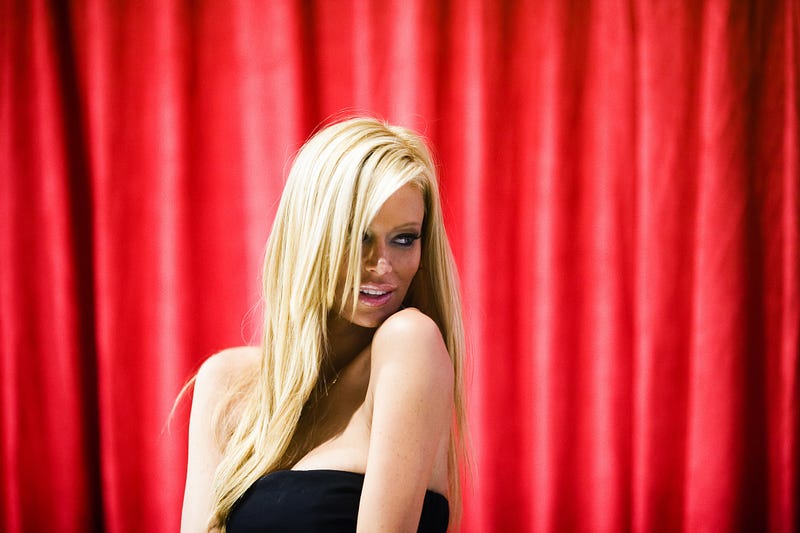
Jenna Jameson by Thomas Hawk is licensed under CC BY-NC 2.0
Have we allowed our discomfort to taint our judgement against those that work within the industry as we perpetuate the seedy image it’s been forced to assume? More importantly, why have we felt it necessary, and acceptable, to criticise sex workers who haven’t done anything wrong aside from working within a profession that doesn’t sit well with our own opinions?

Sex workers often can’t admit what they do without fear of judgement. Conversely, how many bankers have that same reticience or shame when announcing what they do for a living? It beggars belief that a banker can work in an industry void of ethics, celebrating the fact that what they do for a living facilitated a financial crisis and continues to polarise wealth in society, yet not be judged for it. Meanwhile, being an adult entertainer remains a taboo occupation.

Lisa Ann didn’t cause the subprime mortgage crisis but her (former) industry attracts a level of opprobrium and shame that would indeed be apt for the banking industry that actually did.

When a former detective claimed that thousands of thumbnails of porn had been found on the work computer of Tory MP Damian Green, it wasn’t a good look for him. That’s understandable on the basis of that much porn suggesting he was busy knocking one out when he should have been busy representing his constituents and fulfilling his role as First Secretary of State. However, it’s the porn that he’s experiencing shame for rather than the fact that he was viewing it at work.

I’m no friend to the Tory Party but if we’re judging Green and other Tories for their conduct, there are much worse activities that they should be censured for. We have a Tory government that presides over a country where food banks and poverty have become the norm alongside underfunded public sectors. At the same time, the 1% continue to thrive and aggressive tax avoidance and evasion is encouraged. Yet watching legal porn is what we’re judging a Tory MP for? What does that say about how skewed our own moral compasses are when it comes to adult entertainment?

There is a moral debate to be had around adult entertainment and the broader sex industry. The safety and treatment of those within the industry, and the promotion of distorted images of women, gender relations and expectations within relationships, calls into question much around sex work. However, that’s distinct from the stigma that the sex industry attracts.

Everyone is entitled to their views on the sex industry. And while it’s longevity is proven, it will always remain a divisive subject. Although that shouldn’t mean those who work within it should be subject to an unnecessary stigma based on the discomfort of others.
SHARE:

Tuesday, 14 February 2017

How the majors became minor

Why major labels no longer have the allure they once experienced

For millennial musicians, “getting signed [to a major label]” was once deemed the zenith of a fledgling music career; the gateway to becoming a mainstream star. Signing to a major label meant a sizeable budget to fund your project, its marketing and distribution. Being signed to a major label was literally major. It meant glossy videos, award ceremonies, going gold or platinum and huge exposure. And with the machine of the label behind you, artists saw being signed almost as a validation of their talent.

Despite their attraction, major labels haven’t always been without reproach. On Check the Rhime, Q-Tip rapped “industry rule number four thousand and eighty/record company people are shady”. Nevertheless, the alternative to a major label was the less glamorous route of either an independent label or going it alone and self funding your project. Though a major label deal brought with it prestige that the indie route just didn’t afford. If you weren’t signed to a major label, your success was questionable just by virtue of that alone.


On Terror Squad’s Let Them Things Go, Fat Joe disdainfully dissed rappers who had signed to now-defunct independent distributor, Koch Records -

“washed up rapper, you’re not respected/4 years passed and can't even sign to Koch Records”

Ironically, Fat Joe now releases his music via Empire Distribution rather than pursuing a traditional major label deal and signalling a shift in his own perception of major labels’ prestige. He isn’t the only one and from the perspective of artists, major labels have gradually been losing the sheen they once possessed within the landscape of the music industry. Many artists will now proactively eschew a major label in favour of being independent or, having experienced a major label deal, will seek to leave to go it alone.

Previously, breaking a record was done via DJs, radio and marketing; all within the gift of the label as to how aggressively they hit each aspect of the promotion. And if DJs and radio (and latterly television) didn’t like the song, there was always payola to get them to support it regardless.

With the internet, that changed. DJs were no longer the tastemakers and nor was the radio. Rather, they played what people had already decided they liked based on what they were downloading and streaming and what they were talking about on social media.

Online marketing expert Kris Trinity, CEO & Content Strategy Pro of Revolution Content Marketing, cites several precedents of artists across a range of genres who have heavily used social media to experience success without the backing of a major label. Most notably Chance the Rapper, who recently won three Grammy awards, has rejected several offers to sign to a label and opted not to sell any of his music. Instead, he makes money from touring and merchandise and uses a sweeping social media audience to serve his marketing needs and arguably above what a label could do for him. Furthermore, he retains all the creative and strategic control over his career that a label would likely stifle.

A platform like Patreon, where musicians can generate income directly from fans without signing to a label, also provides another option to a traditional career as a recording artist. Along with a comprehensive social media marketing strategy, Kris explains that from a marketing standpoint, commercial success is incredibly viable and companies like Revolution Content Marketing can increasingly effect this.

Social media has effectively usurped the expensive marketing that labels would once spend an artist’s budget on and it’s much more organic. After all, a strong social media strategy can promote a record or artist and their entire brand directly to your device in a way that street teams and traditional promotional methods can’t, and for a fraction of the cost.

In an age where physical music is being bought less, the cost of distribution has also plummeted and the finances of a major label means less than it once did. Suddenly, major labels aren’t so necessary after all and the justification of their business model, which artists are becoming increasingly aware of, isn’t either.

Broadly speaking, major labels operate like investors. They sign an act and invest in their brand and their project. They want to protect their investment so they give the act an advance to sustain themselves and a budget. That budget gets used for everything related to their project. Studio time, producers, everything. When the project is complete, they spend even more of the budget on marketing and distribution and then wait for a return on their investment.

Before the act see a penny of the profits, the label will recoup all the money they spent. That seems only fair as they did put the money up. However, once they’ve recouped, they typically take the lion’s share of profits while the artist sees a fraction. In contrast, putting out a project independently requires a lot of graft on the part of the artist and a big gamble for the artist and their backers in funding it. But if it sells well, they’ve backed a winner in receiving a significantly bigger share of the profits. They see a bigger share of the profits as the artist and their costs relating to the project are lower too. Thus profits comes quicker and their margins are bigger.

When Dizzee Rascal left XL Recordings (an independent yet established label) to go it alone and release Tongue N’ Cheek on his own Dirtee Stank label, it was his highest selling album to date. Dizzee would have been laughing all the way to the bank en route to his Miami penthouse.


As more artists are educated about the music industry, more consider the need let alone desire for a major label. What can they do for you that you now can’t do yourself? Technology has meant audio and video production equipment is accessible and affordable and music and visuals can now be uploaded to streaming sites and have gone viral within hours of being posted. It all begs the question, what do major labels now actually bring to the table?

The death knell hasn’t quite sounded for major labels but they’re arguably in the twilight of their existence in their current format. Having the machine of a major label still counts for something and there are many current artists that benefit from major label backing. They still have a wealth of knowledge of the music industry and can network to push a project to places an independent situation often can’t reach. For newer and less established artists, they can help to build a fanbase that should translate into sales. And for huge stars who need any ceiling to their success removed, the majors also still have relevance.

While the majors aren’t dead, people simply aren’t buying music as they used to because they don’t need to. The internet means we can hear what we want, when we want. As a result, the profit margins of major labels are being eroded in an industry that they no longer have in a chokehold. That’s led to the 360 deal as a desperate attempt to claw back some of their once gargantuan profits.

360 deals are said to provide synergy between all of an artist’s activities with the label having complete oversight in exchange for a share of all profits. Yet it’s another reason why a major label is increasingly less attractive for many.

In the future, major labels will have in excess of several decades worth of back catalogues from which bad contracts (for the artists) will probably still allow them to profit off of masters and publishing (which artists without due diligence were happy to relinquish amidst their zeal in signing a major label deal). Rather than having a current roster of artists, I envisage this becoming their primary revenue stream as their current structure becomes redundant for new artists.

Even today, viable alternatives to the major label route mean the majors have less pull than they once did. Therefore they need to make more compromises if they still want a slice of the pie from a bankable star.

Lethal Bizzle, an artist who certainly knows how to build and promote a successful project and brand, signed a deal akin to a distribution deal for his Dench Records label via Virgin. Bizzle doesn’t need Virgin to do what he does, Virgin needs him and giving him a deal structured in this way means they get some of the cake rather than none of it. As major labels seek to extend their relevance (and postpone the inevitable), such humility will need to shown to achieve it.

Like most traditional media, major labels have had a good run of dominance that’s been scuppered by the digital age and a consequent shift of power from the label to the artist. Artists need to ask themselves what a major label can do for them that they can’t do for themselves at at a fraction of the cost and with less compromise to their artistry. Indeed, anything on that list is fast decreasing.
SHARE:

Saturday, 3 September 2016

Channel 5’s Gangland wasn’t about uncovering gang culture, it merely perpetuated ignorant and negative stereotypes of black youths and the black diaspora

As part of a two-part documentary, Channel 5 recently aired the first episode of Gangland (at the time of writing, the second episode is yet to be aired). Gangland was advertised by Channel 5 in fairly broad terms as essentially an exposé into London’s gang culture. In fact, here’s exactly what Channel 5 said on its website:
Gangland is an original two-part documentary that gains unprecedented access to London’s most notorious young gangs, as they document what life is really like as part of a contemporary gang.
Like many people who decided to tune into Gangland, I expected balanced journalism that would explore the factors that led some youths to gang culture, the failures of society and the individuals in gangs that prefigured their involvement of said life and cautionary tales of those that have since renounced being in a gang through their own expectedly dire experiences or indeed lucky escapes.

Given it was set in London, I also expected the programme to cover gangs of all ethnicities in reflecting London’s ethnic diversity. All of this I thought would be presented against a backdrop of life in a gang that would reflect Channel 5’s social responsibility as a mainstream broadcaster, but also with an approach that showed the seriousness of gang culture in the city.

Alas, perhaps I asked for too much as all Channel 5 delivered with this show was an epic failure that perpetuated ignorant and negative stereotypes of black youths. That’s right, only black youths. Aside from the white girlfriend of one of the protagonists (who felt he was going to beat a case due to no evidence - yet Channel 5 have hours of footage of him incriminating himself), every person interviewed was black.
Gangland’s producer, Paul Blake, spoke of his motivation in making the documentary in the Guardian. The Guardian wrote ‘Blake spent over a decade trying to get a documentary made which would give voice to the thoughts and motivations of gang members’. Blake added “this documentary was born from the fact that I am a black man, born in this country, and I was just pissed off that no one cared about these young black kids who are dying”.

Perhaps that was his motivation and maybe even what he presented to Channel 5 before they requested he amend it to what we saw on our screens. Unfortunately, it isn’t what was achieved with Gangland.

For anyone aware of gang culture, the majority of what was aired on Gangland would not have tallied up with that perception. As a friend said to me, it was like watching a parody for the most part. If you’re in a ‘notorious’ gang and willing to come on a terrestrial channel, barely, if at all, disguising your appearance, and never disguising your voice while talking unimaginably recklessly in incriminating yourself and your peers, you really aren’t about that life. And if you really are in that lifestyle yet still talking like that, then as DJ Khaled would say, “you played yourself” and everyone else around you.

The black youths (because just to remind you, Channel 5 either couldn’t find any non-black gangs or gang members because they seemingly don’t exist in London) who were willing to brandish guns while talking about what they were willing to do, started off as uber cringeworthy. It was akin to many of the American rappers we’ve seen in the UK doing their very best to convince us they’re “from the hood” or a bad caricature of World Star Hip Hop. Attack the Block (and I don’t say that with any kudos for that film either) had more credibility than their utterances and I couldn’t take them seriously. But I quickly went from cringing to being flabbergasted at what I was watching.

One alleged gang member, safe in the knowledge that Channel 5 would never betray his location or any other personal information by which he could be located and identified, spoke about how he’d save a bullet for the police. All the while, they brazenly exposed operations as they spoke more and more with zero caution for themselves and anyone connected to them. Section Boyz might have said ‘trapping ain’t dead’ but those that appeared on Gangland appeared to be trying to bring it to death’s door via Channel 5 along with lengthy prison sentences supported by copious amounts of evidence. The lifestyle they purported clearly isn’t one to be glamourised but their incautiousness beggars belief.

The documentary portrayed the black community as idiots and individuals for whom the price of life is cheap. The reason I don’t caveat that as ‘black gang members’ rather than the black community is because if you aren’t acquainted with black people and perhaps live in a largely ethnically homogenous part of the UK, you might think all black people were like the image shown on the documentary as every person on the show was black.

It’s not as if the mainstream media don’t already drive a racist narrative to the extent that the black diaspora is still faced with prejudice based on such portrayals that we spend our lives refuting. Just look at the media’s annual reporting on the Notting Hill Carnival in contrast to the class A drug-fests that are many festivals yet the latter rarely gets bad press. I commented to a friend that I hoped my in-laws weren’t watching Gangland as they might think whenever I said I was cooking hard food for dinner I might have actually meant drugs rather than breadfruit and green banana.

Gangland left me angry and confused at those who agreed to be on the show but also at Channel 5. I don’t expect Channel 5 to do any favours for the black diaspora but I do expect a broadcaster to show some social responsibility and they have failed in achieving that with Gangland. The documentary wouldn’t actually be amiss on Fox News in a UK special presented by the vile Katie Hopkins.

Of the participants of the show, they were young and presumably eager for a platform to portray themselves in a way that they felt was credible. That in itself is incredibly sad that they’ve mistaken a life of violence and reckless talk as something to pursue and perhaps had no mentors, elders or voices of reason and experience in their lives to show them otherwise and more so so advise that featuring on this documentary was a terrible idea. Any ‘serious’ members in a gang, past or present, would have promptly advised them of that. Nonetheless, I should add that I’m not excusing those that appeared on the show.

The only credible individual of the documentary was Quincy, a former gang member who sought to be a cautionary tale for the life he once lived. Yet even the final edit of the programme seemingly tried to suppress that message. Furthermore, the ignorance that filled the remainder of the broadcast was what Channel 5 deemed more appropriate to air.

Gangland was an opportunity to raise awareness of real problems in London on a platform of balanced, investigative and analytical journalism that explored causes, motivations and solutions. Instead it became a showcase for 60 minutes that lacked credibility and furthered the media’s often racist narrative of negative stereotypes of black people.
SHARE:

Saturday, 7 November 2015

Digital lust

Like many industries, adult entertainment has been compelled to adapt in a digital age. Only recently, Playboy, the iconic magazine and adult brand, announced that its magazine would follow suit after its website and would no longer include nudity from March 2016. Clearly the company has realised that while sex might sell, it no longer does so via the medium of print. The shift from print to television and film and latterly the internet respectively, has seen revenue streams for adult entertainers move accordingly. And in doing so, it’s changed the relationship fans of their work have with them too.

The allure of adult entertainers is arguably contributed to by the fact that they appear unreachable; individuals who operate within a fantasy and highly sexualised world. Traditionally, their fans could fantasise over them in the knowledge that their relationship is one the adult entertainer is ignorant to and therefore never subject to reciprocation of emotions or affection, lustful or otherwise. Though now, the internet has changed that.

As with any entertainers, social media has given unprecedented access to adult entertainers that alters the aforementioned relationship. Now, lustful desires or merely convivial banter or compliments can be expressed via a tweet to adult performers and perhaps even responded to. Where adult performers were once unreachable, the status quo has now been redefined.

Similarly, the digital age has changed the adult industry with premium rate chat line channels. And with it, it’s enabled men (and woman) to have even more access to adult entertainers than ever before.

For those not familiar with the format of these channels, scantily clad or semi-nude women (depending on the time of day) appear on-screen while gyrating with sexually suggestive motions while talking to callers. It’s essentially a chat line where callers can see the person they’re talking to and what they’re doing rather than relying on their imagination. Not wanting the constraints of the television regulations that restrict them to largely softcore acts, some performers on said channels have also opted to operate webcam shows online (and with it presumably charging their viewers even more than the premium rate numbers).

This isn’t anything new; for decades premium rate numbers offering the same service have been
found in the classifieds section of tabloid newspapers. Yet technology furthers the extent of what can be offered and what the consumers are afforded in their pleasure and gratification. Furthermore, it’s altered their relationship with the women they receive remote gratification from. And that’s given rise to the perception amongst some men that their relationship is more than simply transactional.

With the increased and unprecedented access to adult entertainers, many of the men calling these premium rate numbers or ‘chatting’ via webcam are under the impression that this represents a relationship of sorts. While their attraction is based on lustful desire that isn’t reciprocated beyond the façade they’re paying for, some men seemingly fail to understand this. Consequently, they’re happy to buy gifts for the women, shower them with sycophantic messages on social media and overall fail to realise the reality of their interaction as paid titillation.

I struggle to empathise with the rationale of these men. Firstly, and bizarrely, they’re paying for adult entertainment at a premium rate when the internet is awash with a plethora of adult entertainment that’s absolutely free. Not to mention, the internet typically offers much more risqué material than anything they’re paying for. But they’re also going beyond their transaction in buying gifts for the women; an act typically reserved for actual friendships or relationships of which these certainly aren’t.

So why do the men do it? Loneliness? Delusion? Does it make them feel that they could actually have a genuine relationship with these women? With their access to adult entertainers, perhaps they’ve decided to abandon the pursuit of relationships in the real world (which would suggest yet another erosion of social interaction that the internet has brought about). Whatever it is they think they might achieve, it certainly won’t be a relationship that isn’t commercial.

One caller to a chat line channel racked up a bill of £91,000 on account of the women he spoke to sympathising with him following a breakup with his ex-partner. He’s probably not the only person to find themselves in such a situation either. Although did the premium rate numbers not indicate to him that they weren’t providing a counselling service or seeking his friendship? Men like this are blinded by the fact that their access to these women represents little more than a financial opportunity that exploits their naivety, inability to identify the features of a friendship or relationship, delusion and loneliness.

It’s easy to drift between derision and pity for these men but certainly not empathy. To pay to watch a women gyrate on a screen when there’s free adult entertainment online just doesn’t seem to be a decision based upon logic. Alas, lust can deny people of sound perspective.

Speaking objectively, one can’t knock the hustle of the women. And it isn’t just limited to webcam and chat line performers but also traditional adult entertainment actresses. Their social media presence facilitates the interaction the men crave. Furthermore, their online shopping wish lists enable these men to frequently buy the attention (mistakenly taken for affection) of their favourite performers.

There is arguably an intimacy that is established for the men paying to ‘chat’ but arguably not reciprocated by the performers who are separated by a phone line, television screen or computer. Thus, they limit much of the vulnerability of traditional sex work. And presumably, are getting reasonably well paid for it in the process with gifts and money from their fans to boot. If there were to be a perception of the relationship between the women and their callers being imbalanced, in most cases it would seem it isn’t the women that are losing out.

Nonetheless, the digital age has reduced the extent to which adult performers are able to separate their personal and professional life with the increased access they grant. No longer are their fans faceless readers and viewers of films but individuals who they’ve spoken to and in some cases seen via webcam. As a result, they’re providing more intimacy in the relationship between performer and the public and reducing the personal sphere for performers. Given the stigma around adult entertainment, this shift has likely limited their ability to keep the spheres of their personal and professional lives as separate as they once were.

Like many industries, the digital age has changed the adult industry and with it, it’s changed the perception of relationships and friendship for some men who aren’t able to distinguish between paid entertainment and reality. It’s an enigma when juxtaposed with traditional notions of relationships and how we define friendship. But hopefully not one that sets a precedent for the features of human interaction that the human condition craves. Indeed, perhaps that craving, but the inability to fulfil it for said men, is what led to their unrequited affections for adult entertainers in the first instance.
SHARE:

Monday, 25 May 2015

Voyeurism of the rich, untalented and unjustifiably famous

With the digital age and the accompanying proliferation of social media, we’ve seen the cult of the celebrity expand. Media outlets such as E!, TMZ and a plethora of celebrity bloggers, have met an increasing demand for celebrity news with often sensationalist but digestible entertainment. However, with this, the scope of who constitutes a celebrity has also broadened. Where celebrity status previously referred to those whose fame was derived from their talent or skill within areas such as entertainment or sport, an apparent skill set of any kind is increasingly less of a prerequisite. Rather, these individuals have been allowed to rise to the heights of celebrity in making a career of fame derived from… well, nothing.

With the rise of reality television, television audiences have been exposed to the goldfish bowl of on-air people watching. With what initially started with shows like The Real World and Big Brother, the genre offered an intriguing premise for shows of social and behavioural observation and analysis. Although they quickly created celebrities of their respective casts and began to shape the world of reality television. The notion of watching a show that wasn’t actually about anything but insignificant people’s lives was then taken further. What if we watched people whose lives were so farfetched and materialistically distanced from our own, that our intrigue is instead moved to the ostentatiousness of their lives? This would be in spite of how banal their lives and personalities might actually be once stripped away of the so-called glamour of what appeared to be their reality. And with that, a cornucopia of such shows were born.

The Hills, The Real Housewives of… franchise, The Only Way is Essex, Made in Chelsea and arguably the biggest, Keeping up With the Kardashians, and their various spinoffs, have all followed the same template. Watching rich people who appear to spend their days socialising at high-end establishments, shopping and living lives that would appear to be unattainable for most. It hardly sounds like riveting television but it’s a hugely successful format that doesn’t look like it’s ready to disappear just yet. Consequently, we’ve created celebrities out of individuals who already have the money; we’ve just given them the fame to boot. But why? Are they not just simple players in a trite observation? Why have these people gained our attention and our acclaim for effectively not doing anything remotely notable?

Consider the Kardashians. Hugely popular, they have converted their celebrity into spinoff shows, clothing lines and a variety of merchandise. Although what is their talent? Media personality Charlamagne tha God rightly said that the Kardashians’ talent is being able to keep our attention. And I’d be inclined to agree. Kim, Khloe and Kourtney are certainly easy on the eye but that should only get one so far without any discernible talent. Kim, the most famous of the Kardashian sisters, is known more for her sex tape with Ray J than the fact that her father was on OJ Simpson’s legal team or that her stepfather was an Olympic athlete. The latter shouldn’t be reasons for her celebrity status either. But the fact that even they are overlooked when awarding her and her sisters with their fame, demonstrates just how baseless the Kardashian family’s celebrity status actually is. Nonetheless, they are instantly recognisable and international household names.

The Kardashians are also, at face value, not the sharpest tools in the box (I say at face value as they’re obviously savvy enough to have built a brand based on no talent so perhaps it’s more fool me). I’ve watched their show aghast with their foolishness and bizarre life decisions. Furthermore, there seems to be a trend of stupidity as the hallmarks of personalities within said shows.

In his Never Scared show, Chris Rock spoke of magician David Blaine’s then recent ‘challenge’ to go without food for 44 days while living in a suspended perspex box. In referring to Blaine’s efforts, Rock mockingly poses the rhetorical question “are we so desperate that we fall for a trick-less magician?” Similarly, have we become so thirsty for entertainment that we’ve effectively reduced ourselves to people watching of morons? It would appear so.

The rationale for our attraction to this new type of celebrity is not immediately apparent. Could it be escapism to watch uncomplicated lives that appear to be perfect without the stresses of everyday life? Conversely, perhaps we see these individuals as a reflection of our own materialistic aspirations but without the graft and hard work in achieving it. Essentially, if we were to be gifted with the fame, the money and success, without any effort whatsoever, our lives would likely mirror theirs. It’s a departure from the traditional notion of a celebrity where to achieve the fame, a significant talent and accompanying work ethic would be required. As a result, the lives of the Kardashians et al represent a utopia of the highs without the lows of the celebrity lifestyle. In addition, there is also a fascination with the lives of others that are so far removed from our own.

This fascination has led to shows that seek to show the contrast of how the rich live against our own lives. Why are we therefore entertaining projections of lives that indirectly and audaciously seek to belittle ours as inadequate because they do not live up to the standards we see on screen?

Made in Chelsea follows a group of rich twentysomethings residing and socialising amidst juvenile ‘he said, she said’ squabbles in the expensive London area of Chelsea and its wider vicinity. It epitomises the images of rich people who show no sign of having worked for their lifestyles or any intention of doing so. There’s also a somewhat incestuous circle of romantic liaisons within the same circle of friends. Had this been a programme about the working classes, they’d all surely be branded as highly promiscuous for sleeping their way through the friendship group and workshy for not having a job. Though with money and their social class, the cast of Made in Chelsea are free of judgement. Indeed, aside from seeking to show its audience how glamourous the lives of the cast are, it also exudes class prejudice. Yet it’s given a warm reception as it dumps on the lives of the very people who comprise its audience.

Being a celebrity is no longer defined as it once was. Airtime is freely given to those without a backstory or a talent and society seemingly endorses this. Nevertheless, it’s another erroneous measure of success that society is placing upon itself in putting such individuals on the pedestal once reserved for celebrities. For many, the Kardashians et al represent a lifestyle of success and glamour achieved through nothing but privilege and status. And as for celebrities in the traditional sense of the word, with trifling attributes such as talent, they’ve been relegated to make way for the illogical obsession of those who really don’t deserve celebrity status at all.
SHARE:

Saturday, 4 January 2014

Why has mainstream success evaded soca?


Along with reggae and dancehall, soca is very much the music of the Caribbean. Indeed, with its roots in Trinidadian calypso, many would argue that outside of Jamaica, soca is actually a more representative soundtrack to the region.

With Caribbean culture being exported around the world, its music has been no different. Reggae and latterly dancehall has found itself a regular and prominent feature in the pop charts of territories far beyond the Caribbean. Bob Marley is arguably one of the most celebrated musicians of all time regardless of genre. While Beenie Man, Shaggy, Sean Paul and others from the dancehall scene have experienced huge international success. Similarly, albeit with its origins in another continent, so has afrobeat as the contemporary soundtrack of the African diaspora. Yet despite the parallels, soca has struggled to achieve sustained mainstream success beyond the Caribbean.

Where Soca has seen commercial success, it’s typically been fleeting. Barbadian (or ‘Bajan’) Rupee and St Vincentian Kevin Lyttle both experienced global hits. There are of course also soca classics such as Arrow’s Hot Hot Hot that are known far beyond the soca fraternity. But despite the precedents for mainstream audiences finding soca palatable, it has otherwise been brought to unwitting audiences via watered down cover versions. Trinidad and Tobago’s Anslem Douglas first released Who Let the Dogs Out before it was covered by the Baha Men. Similarly, Alison Hinds’ Roll it Gal, a hit in the Caribbean and amongst its diaspora communities, was covered by J-Status with Rihanna and Shontelle but with a more American RnB sound. Is unadulterated soca not deemed commercially viable? And despite the examples to the contrary, why don't record labels consider soca to warrant the marketing push they’re willing to give other genres, particularly from the same region?

Where acts from Caribbean genres have found commercial success, often the characteristics of their signature sound aids this. For example, Sean Paul or Shaggy’s delivery is more melodious and less raw than say Bounty Killer’s or Mavado’s. Their cadence is often slightly slower and more significantly they use less patois and instead more standard English. Furthermore, their subjects of choice are usually more radio friendly than the Five Star General or the self-proclaimed ‘Gully God’ whose sound caters more for the core dancehall fraternity. Formulaic or otherwise, it makes for a sound that mainstream audiences are probably more comfortable with and consequently one that record labels are more willing to invest in.

For soca, the similarities are there with other acts from the Caribbean that have broken the mainstream market. Fast paced cadences are instead replaced with slowed down tempos. Not to mention a seemingly deliberate smattering of local dialect with British or American English replacing overwhelming vernacular and heavy accents. However, those who argue local dialects present a barrier to soca thriving beyond the Caribbean and its diaspora would be mistaken. Germany’s Soca Twins prove that isn't the case as they’ve managed to bring the genre to a territory whose first language isn’t even English. Furthermore, having seen them in Berlin, there isn't anything diluted about the brand of soca they play. Soca therefore needn't compromise itself and its Caribbean essence in widening its audience.

Soca doesn’t need to follow a template for commercial success. Though perhaps previously being too insular with its sound, and a reluctance to diversify in tempo and lyrical content, has worked against it in breaking the mainstream. Although this has increasingly changed. The genre has evolved to showcase its ability to produce music that isn’t just suited to carnival and party atmospheres but a variety of moods. For most genres, this diversification is often a sign of its readiness to break new markets. Nonetheless, despite soca’s commercial potential, record labels still lack the courage to push it into the mainstream.

Being born of the Caribbean, soca is accompanied with vibrant visuals and rich culture. Surely this presents a great marketing opportunity with a culture that accompanies the music - and a culture that albeit intermittently, mainstream audiences have been exposed to. As one of the largest street parties in the world (only second to Rio Carnival), Notting Hill Carnival has long held soca as its original and continued soundtrack. Similarly, the West Indian Day Parade in New York and Caribbean-inspired carnivals around the world showcase soca to the wider public. The introduction to soca is already there but the commitment and investment to capitalise on it has not been forthcoming. Record labels and media outlets either don’t see the potential or aren’t willing to take the risk in pushing a sound that they don’t feel has fully proved itself as commercially viable.

With the demise of Choice FM, Martin Jay’s Caribbean Affair has disappeared from the radio (but can still be found on www.socavision.com) and the likelihood of Capital Xtra bringing soca to its schedule is slim to none. BBC 1Xtra long removed its weekly soca show from its schedule and aside from the occasional burgeoning soca hit, soca only gets airtime during Notting Hill Carnival. As a result, soca’s mainstream exposure is lacking and only granted on an ad hoc basis. Bunji Garlin is currently getting exposure beyond the usual platforms for soca. But how long will it be until the mainstream radio stations and music channels decide they’re happy to allow another token soca hit to grace the airwaves?

In an age of physical music, soca was at a disadvantage in record sales due to the relatively small populations of the Caribbean islands it originated from. Even songs that remained popular throughout the region would not result in big record sales as the population in the region just isn’t big enough. In turn, marketing budgets would have to reflect the anticipated sales and wouldn’t support a significant push overseas. Although, in a digital era where the internet removes all boundaries from promoting music globally, hopefully soca can now get the exposure it deserves.

Soca has long been denied the opportunity to be presented to a mainstream market and showcase the soundtrack to the Caribbean. Nonetheless, as its popularity grows and the Caribbean diaspora continues to champion it, soca will continue to move toward mainstream success.
SHARE:

Sunday, 6 October 2013

The demise of Choice FM

The announcement that Choice FM would be rebranded as Capital Xtra (very unoriginal given BBC 1Xtra) marks the end of an era in black British history (and as some have pointed out, ironically so at the beginning of Black History Month in the UK). Choice FM was the first licensed radio station in the UK with a remit to play black music and brought black music from the shadows of pirate radio and specialist DJ shows on other radio stations. But more importantly, it was another overdue step that validated the impact of black British culture outside of the black community.

Choice FM didn’t maintain all the rawness of some pirate stations at the time but rightly so. It was a legal radio station that sought to provide professionalism alongside black music while retaining authenticity in its music and overall feel. To some, that would surely have appeared an impossible contradiction. However, it created the blueprint for subsequent arrivals to the FM and DAB dial such as BBC 1Xtra and Choice FM Birmingham (which ironically, became Galaxy before becoming Capital Birmingham with a similar fate to Choice FM).
Commander B’s show championed UK garage and hosted the much anticipated clash between Dizzee Rascal and Asher D (Ashley Walters). Soca, reggae and bashment could be heard during peak hours. Hip hop by underground UK artists was also played alongside mainstream and less commercial American hip hop by DJ 279 (who was recently let go to make way for Tim Westwood’s arrival at the station with his brash presenting style and more club friendly brand of hip hop and latterly grime). Before Choice FM, only a pirate radio station could provide this.

In addition to its music output, Choice FM catered to the black community with its advertising and championing of community issues. Its support from the black community wasn’t solely because it played black music (which isn’t exclusively for black people). It was because it was a radio station that represented the black community within a broader media landscape. That was until Capital became involved.

Black music became increasingly popular throughout the 90s in the UK. American artists of black music genres experienced increased commercial success and UK artists followed suit. While Choice FM’s initial target audience may have been the black community, it was now catering to a broader audience. And as social class came to be a bigger social identifier than race, many of the issues Choice FM championed were also now applicable to a wider group that were bound more by social experiences than race. Indeed, many of Choice FM’s campaigns such as Peace on the Streets were not directed exclusively at the black community.

Consequently, Choice FM offered more commercial viability and Capital wanted in. They became a minority shareholder in Choice FM with the radio station citing Capital’s experience in commercial radio being brought to the station. In 2004, Capital assumed full control of Choice FM and immediately the writing was on the wall. Remember when Geoff Schumann and other DJs were unceremoniously sacked from the station? On reflection, Capital Xtra doesn’t seem that much of surprise.

Choice FM’s content also changed. Akin to Kiss FM being taken over by EMAP, Choice FM gradually moved away from its roots and its original listeners, myself included, drifted away only to tune in occasionally. Still, there were glimpses of the old Choice FM. Bashment and reggae was marginalised but veteran reggae DJ Daddy Ernie remained at the station and Martin Jay continued to broadcast his Caribbean Affair weekly soca show. Nonetheless, neither, along with other DJs, will transfer to Capital Xtra. Although, the authenticity of their shows would only appear an anomaly within what I expect will be a largely formulaic and plastic Capital Xtra schedule.

So Choice FM is no more. Capital Xtra is more than a rebranding, it’s a new station and its output will reflect that. Many are angry about the demise of Choice FM but if you look at the precedents with Kiss FM and Choice FM upon being taken over by Capital, should we not have seen this coming? Cynically, it could be said that this was a long term plan when Capital first acquired its minority share in Choice FM.

The demise of Choice FM isn’t just about black music. Of course, soca will probably only return to the consciousness of BBC 1Xtra come Notting Hill Carnival and other less commercial genres will now increasingly rely on internet and pirate radio. More significantly, this is about the marginalisation of black British culture from the mainstream. Consider the DJs that were let go from Choice FM, both prior to the beginning of Capital Xtra and when Capital assumed full control of Choice FM. Irrespective of their respective race, they and the genres they played represented the black British community and black culture. Yet they aren’t deemed commercially viable by the likes of Global Radio (the company that owns Capital Xtra and previously Choice FM).

Even the rebranding to Capital Xtra suggests Global Radio wants to distance the new station from Choice FM as a brand that was associated with black music. Perhaps the ‘Xtra’ was ignorantly deemed suitably ‘urban’ (not black) by Global Radio to still meet the requirements of the licence Capital Xtra will inherit from Choice FM (although I expect Capital Xtra will eventually seek a change in its licence obligations to align it more with its preferred music policy). Though what does that say about media ownership in the black community if the few platforms that do exist eventually disappear beyond recognition due to corporate demands? Will Capital Xtra even bear a modest resemblance to Choice FM? I’ll probably only find out through hearsay as I shan’t be listening to the new station.

The black community and beyond has lost a valuable platform in Choice FM and one which is responsible for a seminal chapter in contemporary black British history. Without Choice FM, it’s unlikely there would be BBC 1Xtra (which despite not having commercial pressures has also increasingly sought a diluted feel from its earlier days) or the success of much black music in the UK. Despite its demise, Choice FM certainly leaves a legacy and perhaps also a cautionary tale.
SHARE:
© iamalaw

This site uses cookies from Google to deliver its services - Click here for information.

Blogger Template Created by pipdig